

As the world accelerates toward net zero, the future of the climate transition increasingly hinges on breakthroughs in nuclear energy—both in the realm of next-generation fission and the long-promised potential of fusion.
While nuclear is often overshadowed by other forms of sustainable energy, namely wind and solar, it remains one of the most promising pathways to decarbonization.
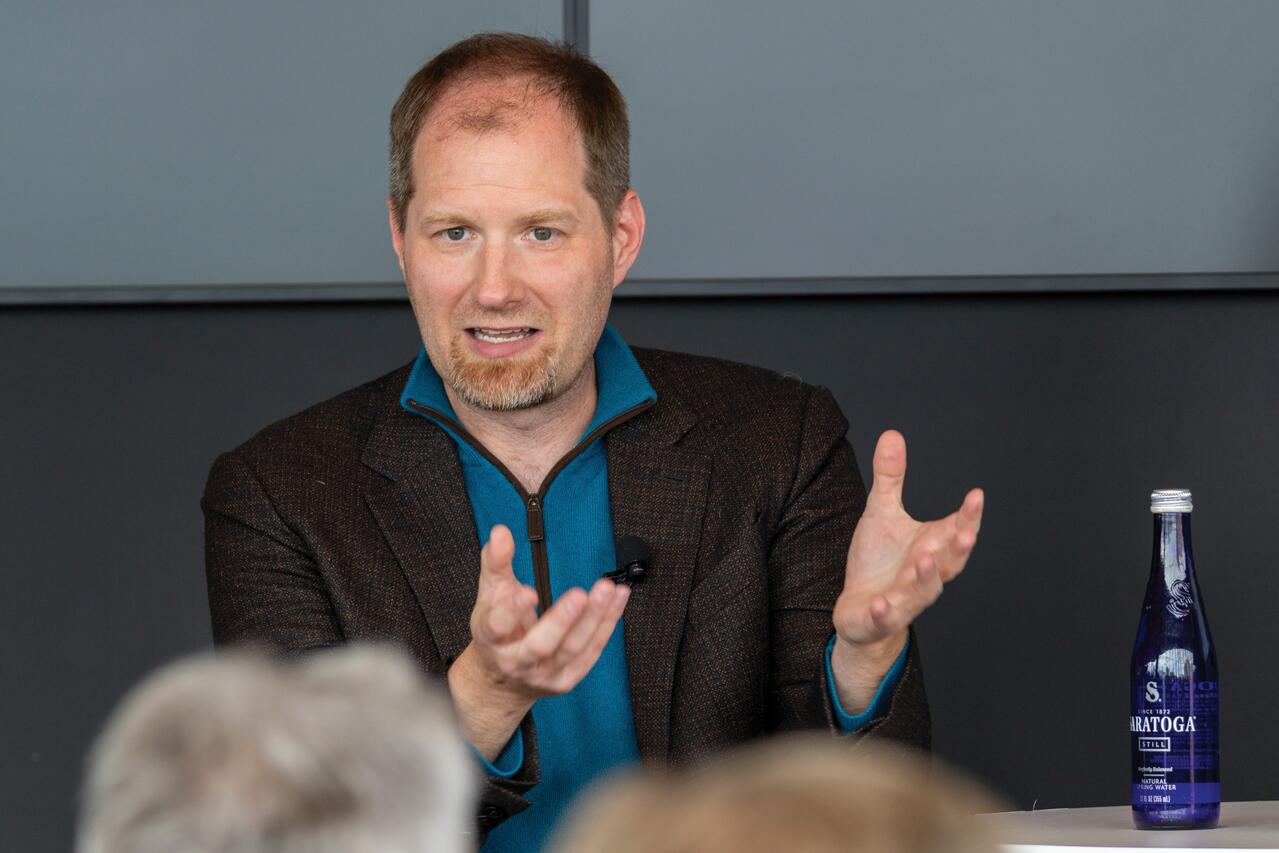
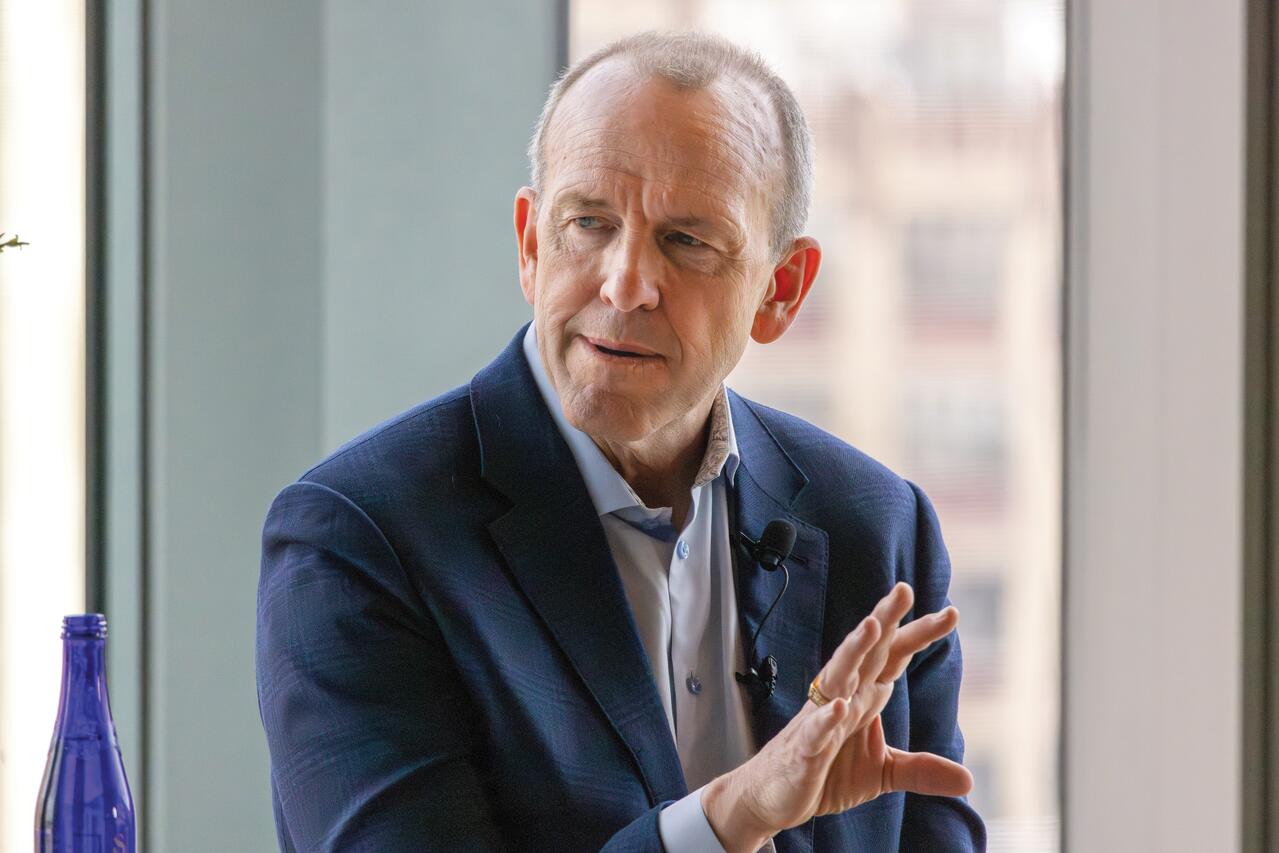
At Columbia Business School, two pioneering CEOs in the nuclear field—Bob Mumgaard of Commonwealth Fusion Systems (CFS) and Chris Levesque of TerraPower—shared their insights into how their respective technologies are shaping the path to a cleaner, more resilient energy system.
Though their companies are rooted in different technologies, both leaders offered a vision of energy that is cleaner, denser, and more scalable than anything seen before.
Fusion Energy’s New Space Race
Mumgaard, who co-founded CFS in 2018, leads one of the most ambitious efforts to bring fusion power—combining lighter atoms to form a heavier one—to market. Speaking at an event hosted by the School’s Tamer Institute for Social Enterprise and Climate Change, he laid out the global stakes in the race to develop commercial fusion energy.
“Fusion has pretty big strategic implications,” he said. “Think about what fusion is—every energy source before was sort of hunter-gatherer mode. You went out, gathered a resource, dug it up and burned it, piped it, or waited for the sun or wind. With fusion, you’re building a machine. So it scales very quickly.”
Fusion offers the tantalizing prospect of clean, reliable, and nearly limitless energy, free from the carbon emissions of fossil fuels and the intermittency of solar and wind. Unlike traditional nuclear fission, fusion reactions do not produce long-lived radioactive waste or carry the same risk of meltdown. That’s why dozens of countries and companies are chasing the dream, including China and the United Kingdom, which have recently outpaced the United States in fusion investment and project scale.
Still, Mumgaard expressed cautious optimism about American leadership in the space. Fusion is now a top-four priority under the new US energy secretary, and regulatory changes—like treat- ing fusion machines more like particle accelera- tors than fission reactors—could open the door for faster innovation.
Since its founding, CFS has raised over $2 billion and grown to more than 1,000 employees. Its flagship project, SPARC, is designed to be the first commercially relevant fusion machine to achieve net energy gain, producing more energy than it consumes to sustain the reaction. Achieving that milestone would place CFS in rare company, alongside only the US Department of Energy’s national laboratories.
Mumgaard outlined six key challenges all fusion companies must solve to transition from physics experiments to functioning power plants:
- Can your company produce stable plasma?
- Can your company heat the plasma to 10,000,000 degrees Celsius?
- Is your plasma dense enough for fusion?
- Can your plasma produce net energy gain?
- Can your fusion machine (i.e., your entire plant) generate enough power to sell the excess?
- Is your fusion power competitive with other power sources?
CFS has already reached milestone three—achieving the necessary plasma density—and is closing in on milestone four: generating net positive energy. But scientific breakthroughs alone aren’t enough.
“Turning these milestones into a commercial reality requires a different kind of innovation,” Mumgaard said. “Project finance, supply chain management, regulatory approval—it all has to come together.”
That’s why CFS embraces a vertically integrated approach, combining scientific rigor with the tools of commercial enterprise. And it’s why Mumgaard insists that leadership in this field requires a willingness to “fire yourself”—meaning to hand off responsibilities as new experts come in and the company’s needs evolve.
Reinventing Nuclear: The Natrium Reactor Advantage
While fusion remains on the horizon, next-generation fission—splitting a heavy atom into lighter ones—is already being reimagined for deployment today. At an Earth Week event hosted by CBS and the Columbia Climate School, Levesque described how TerraPower is transforming nuclear energy’s image and performance.
Founded by Bill Gates in 2006, TerraPower has spent nearly two decades developing the Natrium reactor, a fourth-generation nuclear system that breaks from traditional models in fundamental ways. Levesque, a veteran of the US Navy’s nuclear program and executive roles at Westinghouse and AREVA, brings deep experience in overcoming the technical and logistical hurdles of nuclear construction.
“Traditional nuclear plants are expensive and slow to build,” he said. “They require huge high-pressure vessels and thick concrete containment. With Natrium, we’ve designed something different from the ground up.”
Rather than generate steam immediately, Natrium reactors heat a tank of molten sodium, creating a “thermal battery” that stores energy until electricity demand is highest. This innovation allows TerraPower to deliver power during peak hours, when pric- es are highest, while simultaneously supporting grid stability in the face of rising renewable penetration.
“Energy storage gave us almost an unanticipated benefit,” said Levesque. “It allowed us to separate the nuclear and non-nuclear parts of the plant, significantly reducing costs and regulatory hurdles.”
Natrium’s advantages go beyond flexibility and cost. The system requires no high-pressure infrastructure or proximity to large bodies of water, making it viable for locations like Kemmerer, Wyoming, where TerraPower is building its first plant on the site of a retiring coal facility. The modular design allows for faster construction and the potential for mass production in factory settings.
“Traditional nuclear plants are expensive and slow to build. They require huge high-pressure vessels and thick concrete containment. With Natrium, we’ve designed something different from the ground up.”
- Chris Levesque, CEO, TerraPower
A Converging Vision for the Energy Transition
What unites the visions of Mumgaard and Levesque is the belief that clean energy innovation must be fast, flexible, and scalable. Both fusion and advanced fission aim to replace fossil-fuel-based power while complementing variable renewable sources.
Levesque emphasized the urgency of a diversified approach: “We need a portfolio, and nuclear is a really important part of that portfolio.” He cited MIT research showing that integrating nuclear into the grid reduces total system costs by around 20 percent.
With the rise of AI, electric vehicles, and digital infrastructure, electricity demand is projected to triple by 2050. Nuclear energy offers unmatched power density—a uranium pellet the size of a pinky finger can match the output of a railcar of coal—and provides secure energy in regions vulnerable to supply disruptions.
“When you load the fuel, you’ve loaded two winters’ worth of heat,” Levesque said. “You can’t have an interruption due to a pipeline or railway issue.”
Fusion shares these advantages—minus the radioactive waste or security concerns—but is still a decade or more away from commercial deployment. That’s why companies like CFS are focused on milestone-based progress and reducing “discovery risk” by building on well-understood physics, rather than speculative leaps.
Meanwhile, TerraPower is moving quickly to deploy plants that will bridge the current gap in clean power. As Levesque noted, “Solar and wind are important, but they can’t do it alone.”
Scaling Up: Technology Meets Human Capital
Both leaders acknowledged that technology is only part of the equation. The energy transition will require not just new machines, but new people, processes, and supply chains.
Levesque pointed to TerraPower’s use of advanced modeling and AI to simulate plant operations and optimize supply chains. “The day we turn the reactor on—with a thousand sensors—AI will be learning from the reactor as it goes online,” he said.
Yet a major bottleneck remains: workforce development. Many in the nuclear field lack experience with modern construction projects. TerraPower is addressing the issue by designing reactors that require less onsite labor and by partnering with community colleges to train a new generation of skilled workers.
Mumgaard echoed the importance of cross-disciplinary talent. At CFS, the team includes not just physicists and engineers, but professionals from aerospace, biotech, and regulatory fields—all vital for building a commercially viable fusion company.
Both companies are also navigating global supply chain questions. While some high-precision parts may come from abroad, Levesque stressed the need to revitalize domestic manufacturing. “We should worry about not having enough people to power our economy,” he said.


