

For the medical establishment, the "toddler phase" of AI is over, and the era of institutional reckoning has begun. While Silicon Valley pitches algorithms as a silver bullet for physician burnout and drug discovery during a series of events at Columbia Business School, leaders warned that the industry’s biggest hurdle isn’t the technology itself, but an aging infrastructure unequipped to host it.
Columbia Business School’s 22nd Annual Healthcare Conference—co-hosted by the school’s Healthcare Industry Association (HCIA) and Healthcare and Pharmaceutical Management Program (HPM), along with a recent panel discussion, “AI in Healthcare: Past, Present, and Next,” hosted by the school’s AI in Business Initiative, convened healthcare leaders who are set on unlocking AI’s promise.
“There's a lot of excitement around AI and certainly AI in the healthcare space. But, if you look at what's happened in the past, it seems what we would refer to as AI tourism,” said Carri Chan, Cain Brothers and Company Professor of Healthcare Management and the panel’s moderator. “A lot of pilots, but things that hadn't really seemed very sustainable.”
Now, however, as doctors increasingly bypass hospital IT to use AI in the exam room, the industry faces an urgent strategic pivot: shifting from airdropping niche software to building a foundational institutional competency that treats AI as a core utility rather than a temporary guest.
The Rise of ‘Shadow AI’
The disconnect between institutional caution and frontline reality is stark. A recent survey revealed that while nearly two thirds of physicians are already using AI tools in their practice, only a tiny fraction—less than 2%—are using tools officially deployed by their hospitals or embedded in Electronic Medical Records (EMRs) like Epic. Instead, clinicians are flocking to OpenEvidence or other publicly available models like ChatGPT to manage their workloads.
"There is a huge gap," said panelist Dr. Timothy Crimmins, Chief Medical Information Officer at Columbia University Irving Medical Center. He noted that there is often an "ivory tower" research environment that struggles to deploy tools locally due to learning and accounting for the new risk landscape. Columbia invested time and effort over 18 months to establish governance unlocking large-scale deployment before it could execute on large-scale deployment, according to Crimmins.
Currently, the center has 80 approved AI projects, including ambient scribes that listen to patient-provider encounters to draft clinical notes—a move toward reducing the administrative friction that plagues the profession.
From Algorithms to Agents
The next phase of the revolution is moving beyond simple data mining toward agentic workflows—AI that can complete complex tasks on a human’s behalf. Dr. Junaid Bajwa, Operating Partner at G-Square Healthcare and former chief medical scientist at Microsoft Research, suggested the industry is entering stage three of artificial general intelligence.
"Models are increasingly becoming commoditized," Bajwa said during the panel discussion, arguing that the real value now lies in the engineering innovation around those models. He pointed to use cases that give time back to clinicians, such as agents that can navigate compatibility issues in drug regimens or automate back-office functions in finance and legal departments.
In medical education, this shift is already happening in the form of a "permanent, continuous AI-assisted agent tutor,” according to Dr. Lewis Potter, founder and CEO of Geeky Medics, who during the panel described how his platform uses AI to play the role of patient actors, allowing students to practice history-taking and receive real-time feedback at any hour. However, he cautioned that AI's tendency to sound confident while being "objectively completely wrong" remains a dangerous combination that requires a human to remain firmly in the loop.
The Strategic AI Roadmap in Oncology
At Memorial Sloan Kettering Cancer Center (MSK), AI is no longer a standalone strategy; it is the roadmap for the institution's 2030 vision. At a keynote during the HCIA conference, Dr. Anaeze Offodile II, MSK’s Chief Strategy Officer, highlighted a partnership with OpenAI to deploy the company’s ChatGPT Health across clinical care and research.
The stakes are highest in oncology, where much of the field’s data has been generated in recent years. MSK is leveraging this data to create decentralized virtual trials and use AI to predict which tumor proteins will elicit the best immune response for cancer vaccines. "It’s fundamentally a math problem to predict which of these thousand tumor-shed proteins will light up," Offodile said, noting that this "sci-fi" approach is already seeing best in class survival results in pancreatic cancer trials.
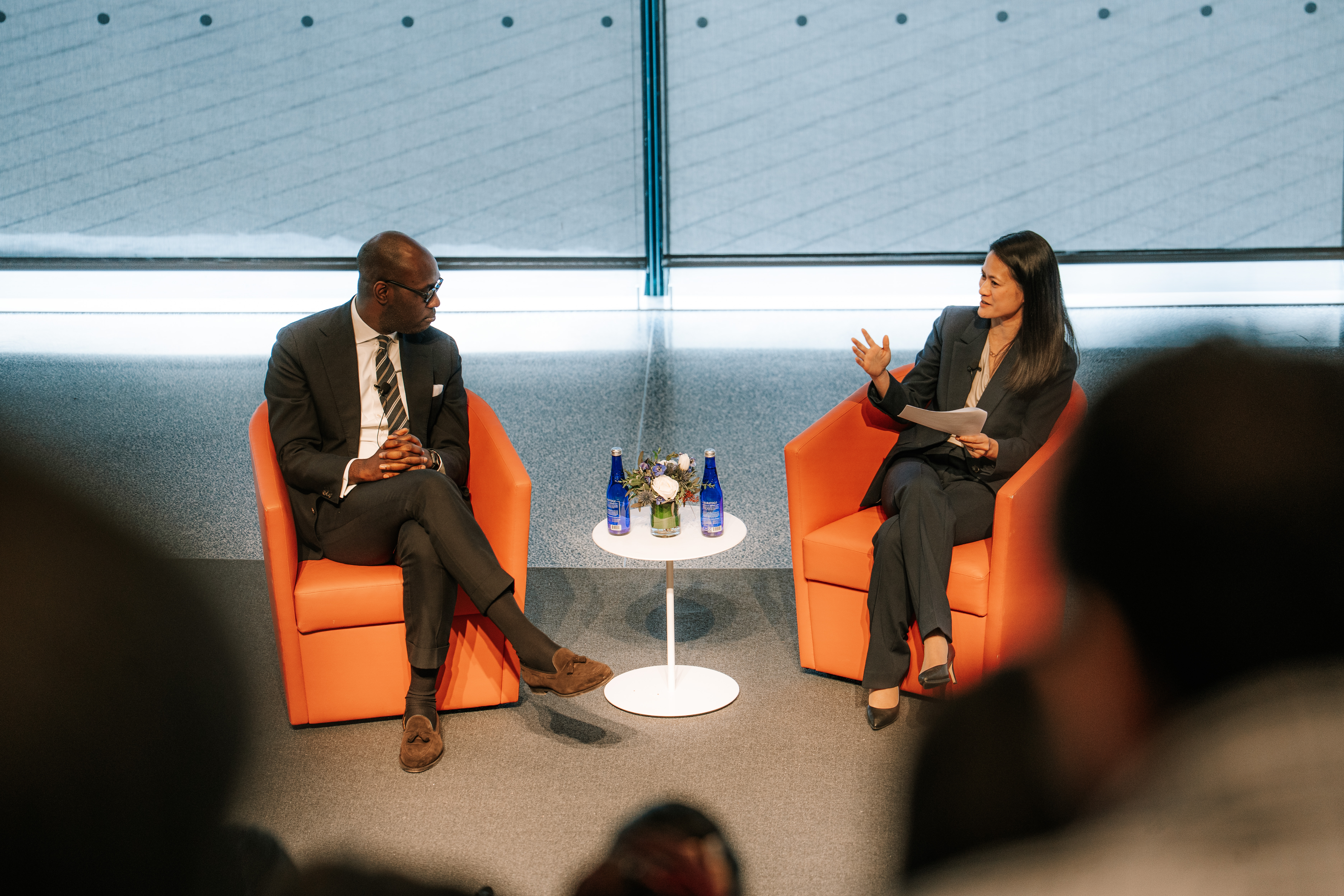
To fund this innovation, MSK recently launched MSK Ventures, a dedicated fund designed to mature internal AI and therapeutic assets. The goal is to move beyond traditional licensing, as MSK found that startups often provide a higher mission-driven return on investment for the institution.
The Global Race for Speed
The global landscape for scientific innovation is being reshaped by the "hockey-stick shaped" growth of AI-enabled development in China. During a keynote talk at the HCIA conference presented by Pfizer’s Chief Strategy and Innovation Officer Dr. Andrew Baum, he noted that while the U.S. remains preeminent in first-in-class innovation, China has been growing its ecosystem for "fast-follow" or "me-better" drug development.
The strategic implication is clear: the cost and speed of early clinical development in China is increasingly shaping how companies think about early stage pipelines. In response, Pfizer has strengthened its global search and evaluation capabilities to ensure it can identify and access high-quality science wherever it emerges, seeking to expand its portfolio of innovative medicines in areas like oral GLP-1s for obesity.
The Future: Healthcare-Specific Models
Looking ahead, the consensus at the forum was that general-purpose models will eventually give way to healthcare-specific foundation models. Trained on massive troves of EMR and genomic data, these models would not just summarize notes but complete the sentence of a patient’s life—projecting probability tracks of how a disease will progress over a decade based on a six-hour stay in the emergency room.
Panelist Dr. Laurent Ganem '86, Founder and Chief Executive Officer, G Square Healthcare Private Equity LLP, expressed deep optimism about AI’s role in public health, noting that “AI, one way or another, is bringing this ability to actually implement preventative medicine in the future ... for me, it's one of the most exciting part of the predictive AI aspects.”
As the technology matures though, the industry’s success will likely depend on whether it can bridge the gap between the ivory tower and the clinic. As Bajwa noted, "Consumers are already moving the needle ... and the hospitals and your establishment are going to have to play catch up."

