

Before business school, Natalie Aresta-Katz (MBA ’26) spent three years as a regulatory researcher at a big law firm, working on a floor where a typewriter still sat in the hallway. She tracked disclosure requirements across more than 90 countries, coordinating local firms and as many as 13 paralegals, largely by hand.
Yudai Matsuoka (MBA ’26) spent his early career dealing with a very different challenge. As a tuna distributor, he fielded orders by phone, text, email, WhatsApp, and WeChat, and had to remember that a certain chef’s “as usual” meant one specific cut of bluefin from one specific supplier. Get it wrong and a restaurant opens service short.
Aresta-Katz’s experience at the firm led her to co-found Regbase.com, an AI-based legal platform that helps companies and governments identify new and obscure laws across the world. Matsuoka used his experience in seafood distribution — and as a fisherman — to co-found Asakana.co, which turns the messy way restaurants order into cleaner orders in a distributor’s system.
Y Combinator, the prestigious and selective Bay Area startup accelerator, admits roughly 1 percent of the companies that apply. This year, it accepted them both. Here’s how they beat the odds.
A fisherman wonders, ‘How can I make this industry better?’
Matsuoka traces the idea behind Asakana to his grandfather, who took him fishing near Osaka, Japan, from the age of five. One morning, Matsuoka hauled in more sardines than he could eat and started throwing them back. His grandfather scolded him for wasting food. Born in the late 1930s, his grandfather had spent the war hungry, and fishing was how he fed his family.
As an adult, Matsuoka traded tuna at Mitsubishi Corporation and later worked as a fisherman off Kagoshima. He began to develop the mantra that guides Asakana: People who feed everyone else are underpaid and underappreciated. That needed to change.
“I started to feel like, ‘How can I make this industry better?’ That’s the reason I started my own company,” Matsuoka says.
Powered by AI, Asakana monitors every channel a seafood distributor’s customers order through, learns each buyer’s shorthand from order history, and drafts the order in the system the team already relies on, flagging anything that needs a human eye. By Matsuoka’s account, distributors lose roughly a third of their time to order processing and a fifth of their revenue potential to messages they never get to.
A day before Matsuoka’s YC interview, his classmate Aresta-Katz, who had just finished her own YC batch, ran him through a mock interview and suggested he bring the partners some fish.
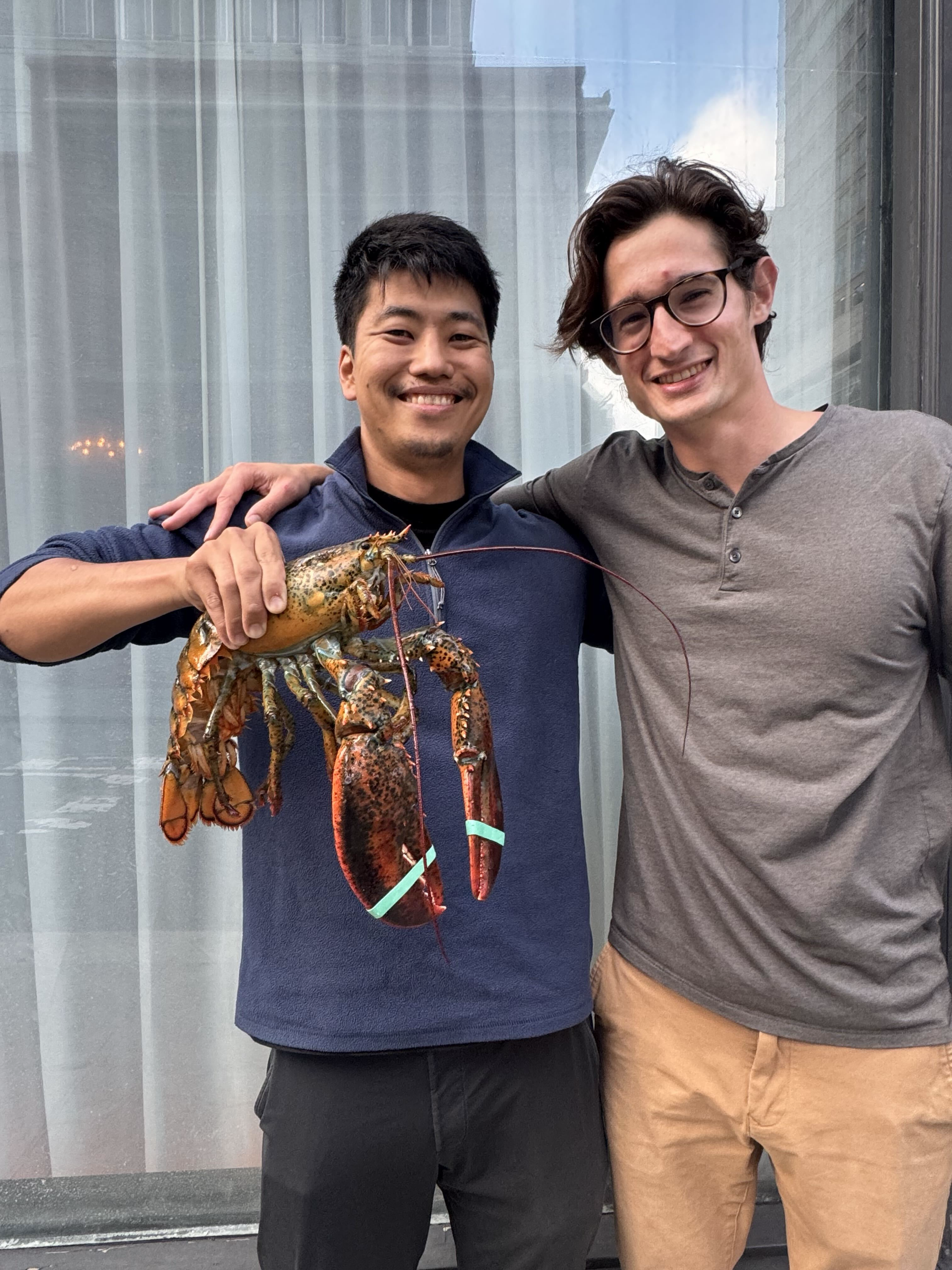
The morning of the interview, Matsuoka stopped in to see a customer. The customer had a friendly amendment to Aresta-Katz's suggestion: instead of just any seafood, bring lobster.
The partners declined the lobster but accepted Asakana into the accelerator’s Fall 2026 batch.
A founder since high school
Aresta-Katz founded her first company, Saponify, as a high school student, when her soap business grew big enough that she wanted to control the recipe, which meant controlling the supply chain.
Between the ages of 16 and 23, she sold more than $1 million of soap base on Amazon after the pandemic sent demand soaring. With the world shut down, she eventually sold out of stock.
Given her background, Aresta-Katz eventually caught the attention of the law firm Paul, Weiss which needed someone to sort through mounds of disclosure requirements. Her work there inspired Regbase, which tracks rules posted only to social media or buried in consultation portals — sources search engines and language models never index.
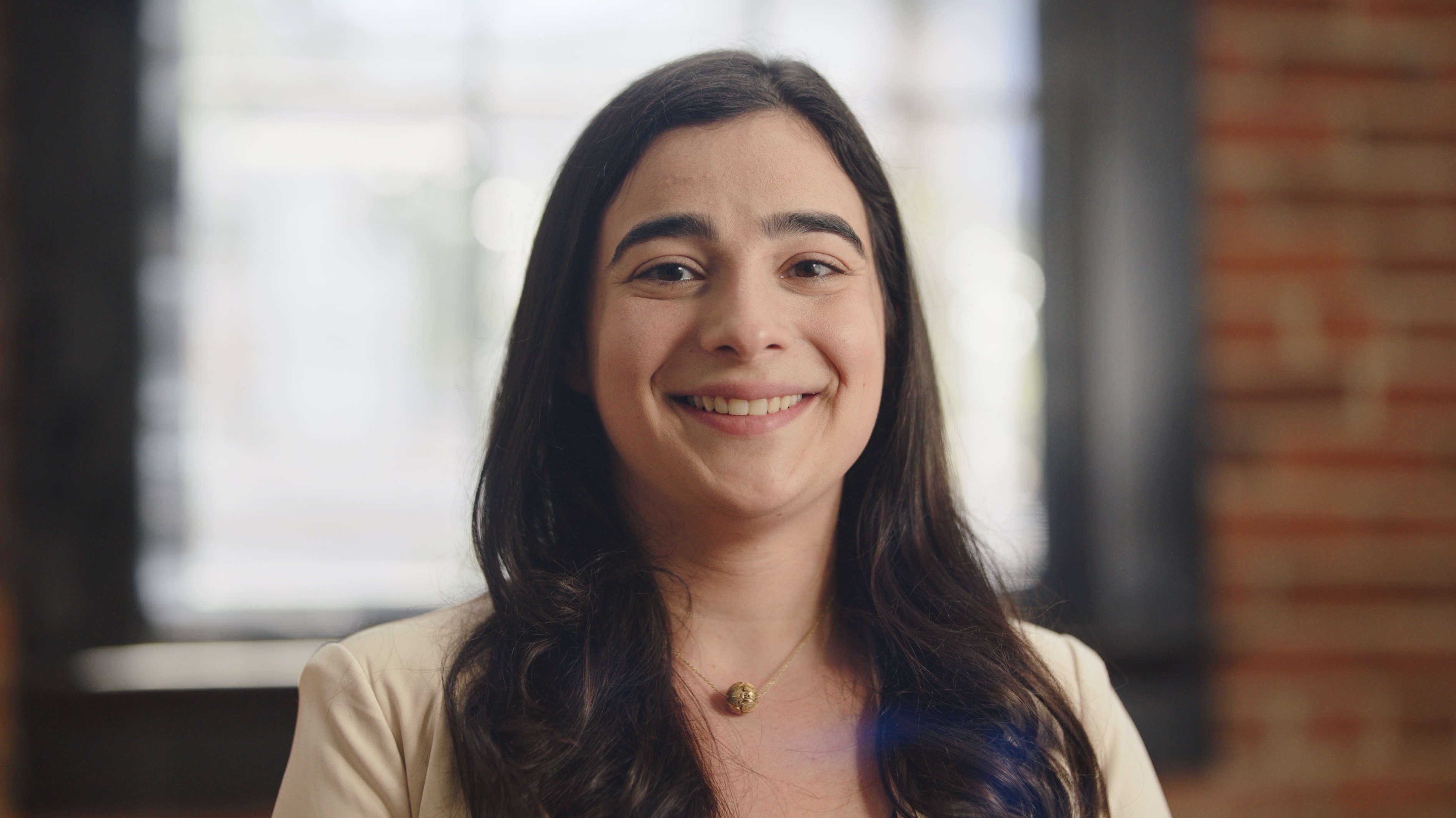
Aresta-Katz ran Regbase as a consultancy through her time at CBS, working full-time from the back of her classrooms.
She nearly didn’t send her application to YC: the thought of leaving school was hard. CBS Professor Mattan Griffel, who got into YC twice himself, told her to submit anyway. Aresta-Katz and her co-founder Ethan Shea got in.
‘Most founders I see get stuck because they never get started’
YC does not generally accommodate students, as it expects founders to work full-time. Aresta-Katz is the first current CBS student the accelerator has taken since 2019. So when the acceptance came that December, her first assumption was that she would have to drop out.
With support from academic advising, as well as guidance from Griffel and Professor Sandra Matz, Aresta-Katz reconsidered. She found additional help at the Eugene Lang Entrepreneurship Center’s Entrepreneurial Greenhouse Program and the Tamer Institute for Social Enterprise and Climate Change. With their assistance, she was able to rearrange her commitments — including teaching incarcerated people through the ReEntry Acceleration Program — and graduate.
A first-year business analytics course taught by Professor Tianyi Peng gave Matsuoka the support to eventually form Asakana. Peng recalls Matsuoka asking hard questions and then turning up at office hours with an idea. The class had covered vibe coding; two weeks later after learning about the technology, Matsuoka put it to good use and came back with a working product.
Matsuoka participated in the Entrepreneurial Greenhouse Program, as well as Columbia Build Lab, which paired him with engineers. That allowed Matsuoka, a non-technical founder, to staff a highly technical company. Instead of chasing funding, Matsuoka asked the School's Center on Japanese Economy and Business for introductions to New York chefs and grocers, connections he considered more valuable than money at that stage. That instinct later won Asakana a $15,000 Open Track Award at the Startup Columbia competition.
That’s similar to the advice Griffel gives students. “Just launch your product and start getting users and revenue as quickly as possible,” he says. “Most founders I see get stuck because they never get started.” That’s because, he argues, what distinguishes an application is evidence the founder can execute.
Aresta-Katz’s own advice to current business school students has nothing to do with being a founder while in school. It’s about seizing opportunities.
“Take the strange classes. Say yes to the trip. Have as much fun with it as you can,” she says.

