

When Manal Kahi moved from Lebanon to New York, she found herself missing the taste of home. The hummus she bought in grocery stores just didn’t compare to her grandmother’s, so she began making her own, sharing it with friends and classmates at Columbia’s School of International and Public Affairs.
Her homemade food quickly became a hit, so Kahi ’15SIPA and her brother, Wissam ’04, soon launched Eat Offbeat, a business that employs refugee and immigrant chefs to cater the flavors of their home countries for events across the city. The company’s mission, to celebrate heritage through food while creating meaningful employment, would go on to inspire a full-fledged catering business, a restaurant in New York’s Chelsea Market, a partnership with Angelina Jolie, and gift boxes shipped nationwide.
Between Eat Offbeat’s inception and its success, the company received support from Columbia Business School’s Tamer Fund for Social Ventures. Established in 2015 by Sandra and Tony Tamer, The Tamer Fund currently provides $25,000 seed grants and mentorship to early-stage Columbia University–affiliated ventures that are working to address the most pressing social and environmental challenges.
Open to students, alumni, and faculty from across the University, the fund supports founders at a critical inflection point, helping them turn promising ideas into businesses with real-world impact. Ten years after its inception, the fund has grown into a defining part of Columbia’s social innovation landscape, awarding seed grants to nearly 80 ventures chosen from more than 1,700 applications. In total, the ventures have raised more than $300 million in funds.
“It was instrumental to our existence today that we got that funding at the very early stage,” Kahi said. “I remember when we went into the room and pitched to the board, they were excited, they were very enthusiastic, and they were very positive. Even though we didn't have anything proven yet, they believed in the idea and pushed us to get started. Having the money allowed us to really start investing in a few things."
The Spark
The idea for the fund grew from the Tamers’ conviction that entrepreneurship and innovation could be powerful tools for solving social and environmental challenges.
“I've always believed that entrepreneurship and innovation can be powerful tools for solving real-world problems,” said Tony Tamer, founder and co-CEO of H.I.G. Capital. “Sandy and I wanted the fund to give students and alumni the confidence and support to take their ideas and encourage them to test them in the real world. My hope was that it would inspire a culture with the students where innovation and impact go hand in hand."
The fund exists as part of CBS’s Tamer Institute for Social Enterprise and Climate Change, which prepares leaders to meet their responsibility to society by applying business knowledge, entrepreneurial skills, and management tools to address social and environmental challenges. Established in 2015 as the Tamer Center for Social Enterprise, the institute has become a critical launchpad for business leaders and business research that blends financial sustainability with measurable impact.
Learning Hands-On
The Tamer Fund’s impact comes not just from its seed grants, but also its integration with the classroom. The Investing in Social Ventures course, co-taught by Professors Vikas Raj ’10 and Julius Mokrauer, turns Columbia Business School students into real-world impact investors. More than 1,300 MBAs have taken the course since its launch.
Each semester, students are divided into teams, assigned to evaluate ventures applying for Tamer Fund grants, and tasked with delivering formal due diligence reports. They learn to assess scalability, sustainability, and mission alignment — and must ultimately make a funding recommendation.
“You can talk about a case all day, but actually looking at a company introduces complexity and nuance that you'll never get from reading a case because you're actually talking to the founders. You're dealing with things that change, even over the course of just six weeks. It's not static,” said Raj, co-founder and managing partner of ResilienceVC.
The process challenges students to navigate uncertainty, synthesize limited data, and make decisions with real-world consequences. Founders, in turn, gain constructive feedback and exposure to Columbia’s network of experts and investors — a rare form of experiential learning that creates value on both sides.
“As investors we're not just analyzing. When we give feedback, we become co-creators in this process with them. So the feedback that goes back to them and how it goes back to them matters. And like impact investors, we can create impact just in our diligence process,” said Mokrauer, managing director of Evolve Ventures and a board member of the Tamer Fund.
For many students, the course is their first glimpse into how capital can be used as a force for good, a lesson they carry into their careers long after graduation.
Ventures Creating Change
Eat Offbeat (Manal Kahi ’15SIPA and Wissam Kahi ’04BUS)
Eat Offbeat employs refugee and immigrant chefs to bring authentic global cuisines to New York City, while also challenging stereotypes about migration and displacement. The company began with Kahi’s homemade hummus and grew into a thriving catering and retail business that now includes a restaurant at Chelsea Market and a cafe located within Angelina Jolie’s creative hub, Atelier Jolie.
When she and her brother, Wissam, first applied to the Tamer Fund, Eat Offbeat was little more than an idea on paper. The fund’s seed capital allowed them to rent a kitchen, hire their first chefs, and build out their operations. Just as importantly, the support gave them credibility in front of potential customers and partners.
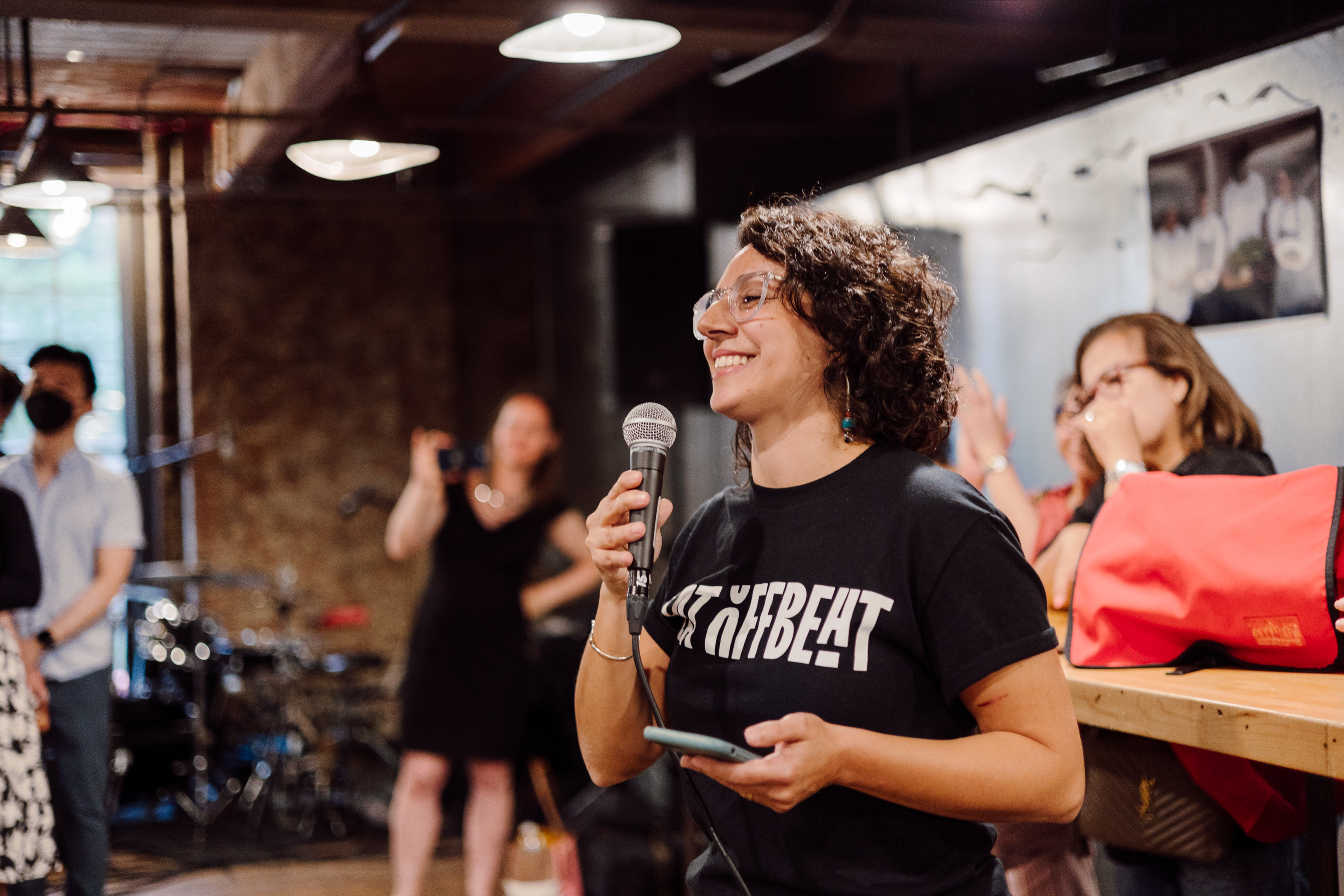
Kahi often points to what she calls her company’s “North Star” — the unwavering mission of connecting people through food. Even when Eat Offbeat pivoted through the pandemic and beyond, she says, that guiding principle never changed. When COVID-19 shut down corporate catering, the company lost nearly all of its business overnight. Determined to keep her team employed, Kahi worked with her chefs to transform their catering menu into home-delivered meal boxes. Within weeks, Eat Offbeat was feeding New Yorkers sheltering in place, relying on the same culinary traditions that had always defined the company.
Kahi’s advice to founders: hold tightly to that North Star.
“We went from a B2B model to a restaurant space. We had to relearn everything. We had to rebuild our business from scratch practically. But the North Star was the same — food made by refugees. The impact was still the same. Nothing changed,” she said.
Synvect (Pooja Y. Patel ’18PH ’16BC)
A biotech venture at the intersection of climate and health, Synvect develops bioengineered mosquito eggs that release sterile males, reducing populations that transmit diseases such as dengue and malaria. The concept emerged while Patel was working in public health and researching climate-driven changes to mosquito habitats. Frustrated by the limits of chemical pesticides and their environmental impact, she and her co-founders began exploring a safer, genetic approach to mosquito population control.
When Patel applied for support from the Tamer Fund in 2024, Synvect was already moving from lab trials to large-scale testing in California and Texas. The fund’s recognition, she says, helped validate their work and opened doors to the Columbia alumni network and a broader community of socially minded investors.
“After we got the award, we were really connected with a lot of people in the New York City space — founders, investors, many of whom actually ended up investing in Synvect for our VC round,” she said. “Because of that stamp of approval, we got access to additional investors and customers.”
Patel emphasized that social ventures must withstand the same level of rigor as any other startup. She believes that structuring a venture with a sound business foundation first and then layering on its social mission is key to long-term credibility and scale. In her view, a clear, results-driven business case gives impact-driven founders the best chance to attract investors and achieve meaningful change. Her advice to other founders on this journey is to be authentic.
“I thought I had to fit into this founder archetype — bullish, overly confident — but that wasn’t me,” she said. “Once I leaned into my own style, it resonated with people way more because it was authentic. Pitching became fun again.”
WellMiss (Jennifer “Jaki” Johnson ’18JRN)
WellMiss is an integrative trauma specialty clinic for women that treats trauma as both a mental and physical health condition, a mission born from Johnson’s own experience of loss. After the unexpected death of her teenage son, she found herself navigating an uncoordinated healthcare system that treated mind and body as separate. However, research from the University of California San Francisco’s Center to Advance Trauma-Informed Healthcare has found that trauma impacts the brain, hearth, nervous system, and immune system, and is associated with 8 of the 10 leading causes of death.
Johnson’s frustration with that fragmentation and her determination to build something better led to the creation of WellMiss.
“One in two women experience at least one or multiple traumatic experiences in their lifetime,” Johnson said. “I was one of those women.”
She described the painful process of seeking care, cycling through therapists who struggled to address her grief until she found one who truly understood. Johnson also suffered from stress cardiomyopathy, or broken heart syndrome, a leaky heart valve, insomnia, and weight gain, necessitating her need for a whole-health experience. While seeking such care, Johnson soon learned that many clinicians are not trained to address the physiological symptoms of trauma, such as inflammation, dysregulation, sleep disruption, and cardiac effects.
“Trauma is truly a specialty,” she said. “It has to be somebody who can work with traumatic experiences and somebody who understands the grief that comes with traumatic experiences.”
Those insights became the foundation of WellMiss’s model: a collaborative care team that combines therapists, integrative doctors, nutritionists, and naturopathic educators to address trauma’s emotional, physiological, and cardiovascular dimensions. Unhealed trauma is the hidden cause of many preventable illnesses.
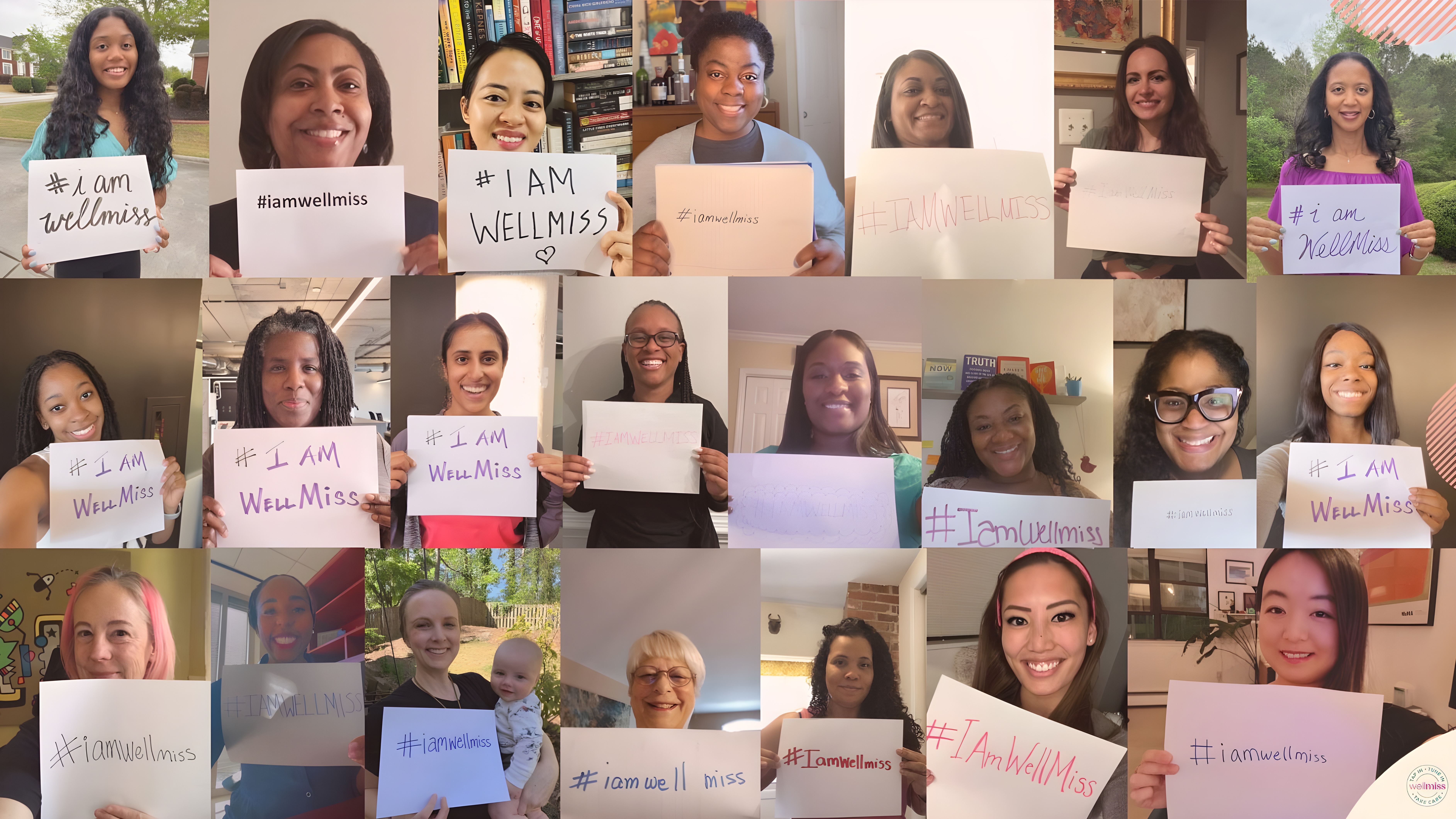
When WellMiss launched its clinical beta in 2023, Johnson and her team trained their first clinicians extensively in trauma-sensitive methods and grief-informed care — approaches that focus on compassion, awareness, and evidence-based healing. The pilot cohort included survivors of traumatic loss, domestic violence, and other life-altering experiences, all supported through a fully digital platform that made care accessible beyond traditional clinical settings.
The Tamer Fund’s support arrived at a pivotal moment, providing resources to expand WellMiss’s training and capacity. The funding, Johnson says, validated the company’s innovative model and helped attract attention from investors and partners in the health sector. It also gave her a sense of confidence that her mission resonated beyond her own personal story.
As an alumna of Columbia Journalism School, Johnson found the connection to the University community especially meaningful. Today, WellMiss serves women 18 and older, with plans to expand nationally — and eventually globally. Beyond WellMiss’ global expansion, the company is also working to establish a new category in women’s health: integrative trauma care delivered through a virtual trauma-specialty clinic for women who are victims of crime, survivors of traumatic loss, and those navigating life-altering experiences.
Because of the huge gap in addressing trauma’s impact on both the mind and the body, and the fact that one in every two women are affected by trauma, she envisions bringing integrative trauma care to women worldwide.
Johnson’s advice to early-stage founders is to be pragmatic, but hopeful.
“Find something you’re truly passionate about — something you’d see through. It’s never too early to tell your story, because your story matters,” she said.
The Power of Early Support
Over the last decade, the Tamer Fund has evolved alongside the ventures it supports. The portfolio now includes a growing number of scalable hybrid and for-profit ventures, as well as nonprofits. Across 16 Columbia schools, the fund reflects a unique mix of disciplines tackling issues in energy and climate, social justice, and health, including mental health.
Through its due diligence process — 360 ventures reviewed and counting — the fund has become both a pipeline and a proving ground. Students learn to weigh financial and social returns, founders gain investor-ready skills, and Columbia Business School fosters a generation of graduates fluent in impact.
“This is exactly the kind of virtuous circle that we hoped the fund would create,” Tamer said.

