
What does it take to improve a business while learning to lead one?
At Columbia Business School, an experiential course is helping MBA, EMBA, and engineering students answer that question by embedding them directly into the day-to-day operations of fast-growing New York City companies. The course offers a unique blend of academic rigor and practical application by allowing students to work hand-in-hand with local entrepreneurs on real operational challenges with measurable outcomes.
Professors Nelson Fraiman and Angela Quintero teach the Process Improvement and Growth course, which "puts theory into practice in a perfect way by learning on the job. "
Fraiman, a professor of professional practice in the School's Decision, Risk, and Operations Division and faculty director of the W. Edwards Deming Center, teamed up with Quintero, an adjunct professor in the division and the executive director of the Deming Center, to teach the course four years ago.
Since then, they have connected students with a cohort of entrepreneurs, most of whom are based at the Brooklyn Navy Yard, a former shipbuilding site that has recently become a hub for manufacturing and innovation on the East River waterfront. These businesses stand at pivotal moments in their growth trajectories. The course also partners students with larger companies, mainly operating in the healthcare industry.
Regardless of the business, for students, they're laboratories for applying everything from process mapping to continuous improvement frameworks in real time.
Learning by Doing
The class comprises three pillars: case study analysis, guest speaker insights, and applied consulting projects.
Students begin the semester with case discussions and lectures grounded in process improvement methodology. Then comes the hands-on work: Each student team, composed of three to four MBA, EMBA, and engineering students, is paired with a company and tasked with identifying operational inefficiencies, proposing solutions, and developing implementation plans.
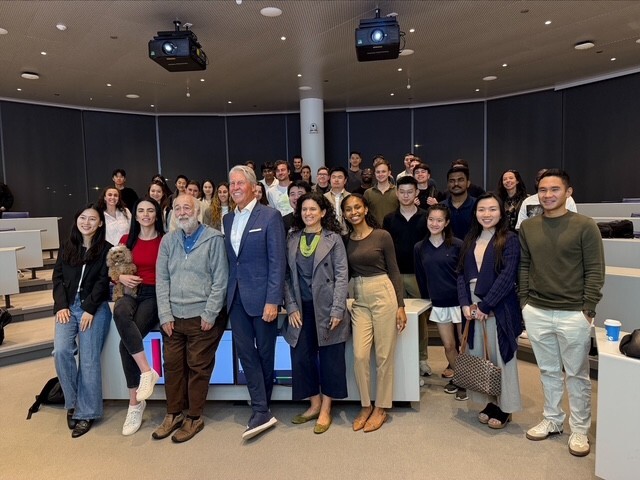
"All the knowledge we learned in class was immediately useful, and it was very rewarding to apply it in a real-world setting," said one student in the course’s end-of-term class evaluation. Another praised its "great blend of theory, insights from executives, and hands-on application."
Over 12 weeks, students meet regularly with their company sponsors, gather data, and apply business frameworks to diagnose bottlenecks and propose improvements. The goal: deliver tangible, actionable strategies that help their companies grow smarter and more efficiently.
"We want a mix of companies in the class, small/ medium and big/structured.," says Quintero. "We like the small/medium-size companies at inflection points, because change can happen quickly and students get to interact with the actual founders. Our students rarely have opportunites to help these type of companies. At the same time, including bigger companies brings a different perspective and challenge to these projects as well and it is often more aligned with what our students will do after gratuating. They learn a lot from having both types of projects."
According to Quintero, the Brooklyn Navy Yard is an "excellent" location for these parameters because "to have your business at the Brooklyn Navy Yard, you must have a component of innovation and manufacturing. And that's very interesting for the class because it fits with our process improvement methodology."
Creating Opportunity for Students and Entrepreneurs
While the process improvement project is the centerpiece of the course, its impact ripples well beyond a single semester. Quintero and Fraiman have built a broader ecosystem that supports students, serves local companies, and deepens the School's connections with alums and New York City's entrepreneurial economy.
“I especially appreciate the hands-on project with the startup, which offered a rare and valuable opportunity to apply classroom concepts in a real-world setting. It not only deepened my understanding of process mapping and identifying growth levers, but also taught me how to collaborate closely with a dynamic team under real-world business constraints,” said Kishore Kuppusamy, MS.
Startups selected for the course receive more than student support—they gain access to Columbia's vast network of operational experts and investors. One example is Ed Goodman '79, a CBS alum and early-stage investor who volunteers each semester to offer strategy sessions for participating entrepreneurs. For 90 minutes, company founders pitch their business models and growth plans and receive tailored feedback on everything from investor strategy to business model refinement. The takeaways often inform students' recommendations.
"We were very satisfied with the project and the way the class is structured. The collaboration was meaningful and productive. The outcomes were applicable and relevant to our real business needs," said one company sponsor.
The course also features accomplished guest speakers, from CEOs of Fortune 500 firms to founders of fast-scaling startups. Instead of just attending lectures, however, students are invited to lead the sessions. They coordinate with the speakers in advance, gather questions from classmates, and conduct prep conversations ahead of time.
"This is an incredible opportunity for the students because they hardly ever have that direct contact with this type of speaker," said Quintero. In some cases, that connection leads to internships or job offers. One student, inspired by guest speaker, Daniel Ramot, founder and CEO of Via, later joined the company full-time.
At the end of the semester, students present their final recommendations directly to company leadership—and then the handoff begins. Companies are encouraged to implement the suggestions, and faculty follow up six months later to track what's changed. Students who stay in touch often hear how their work contributed to measurable improvements.
"Our team’s final presentation impressed our CEO and CMO, and we look forward to implementing the solutions developed by the students," said entrepreneur participant John M. Caridi’24, Director of Neurosurgery Spine - Western Region, Neurosurgeon, Lenox Hill Hospital
Drawing from Experience
For Quintero and Fraiman, the course represents a culmination of more than 15 years of work at Columbia Business School and the Deming Center.
The course draws on multiple initiatives the professors have helped lead, including the School's Entrepreneurship and Competitiveness program for Latin America (ECLA), the Deming Cup speaker series, and their long-standing connections across CBS and the School of Engineering and Applied Science (SEAS). Some companies they partner with today source ingredients or inspiration from ventures that came through the School's international programs.
The course's guest speakers, too, are often drawn from that wider network and are sometimes brought in not just to speak but to create student opportunities. Opening doors for students, Quintero noted, is a core part of their mission, and the class is one of the most direct ways to do it.
Columbia Business School alumni interested in pursuing a project for their companies as part of the course may contact Nelson Fraiman ([email protected]) or Angela Quintero ([email protected]).
FAQs:
Q: What is the Process Improvement & Growth course at CBS?
A: It’s an experiential course where MBA, EMBA, and engineering students work directly with fast-growing New York City companies to identify operational challenges and deliver practical solutions.
Q: How do students gain hands-on experience in the course?
A: Student teams partner with local entrepreneurs, often based at the Brooklyn Navy Yard, to analyze inefficiencies, propose improvements, and present strategies to company leadership.
Q: What do companies gain from participating?
A: They receive actionable recommendations, access to Columbia’s network of experts and investors, and opportunities for long-term collaboration with faculty and students.

