
Friday, April 17th
Columbia Business School
What does it mean to legacy; not as a noun, but as a verb? That question anchored every conversation at the 2026 CBS Family Enterprise Conference. Across a full day of dialogue, workshops, and candid exchange, more than 200 leaders, next-generation members, and family office professionals, gathered to explore how legacy is made, carried, and renewed. Not in spite of difference, but through it.
This is not a summary of what was said. The conversations that unfolded were candid, personal, and held in confidence. What follows is an overview of the questions each session put on the table, and an invitation to continue that thinking.
Who Was in the Room
The strength of a conversation depends on the people who show up to have it. This year's conference brought together a genuinely diverse group:
- 200+ attendees
- 44 attending with family
- From founders to G6 and above
- CBS Grad Years from 1991 – 2005
Across cultures, industries, and generations, participants brought a shared willingness to ask hard questions out loud, and to listen as much as they spoke.
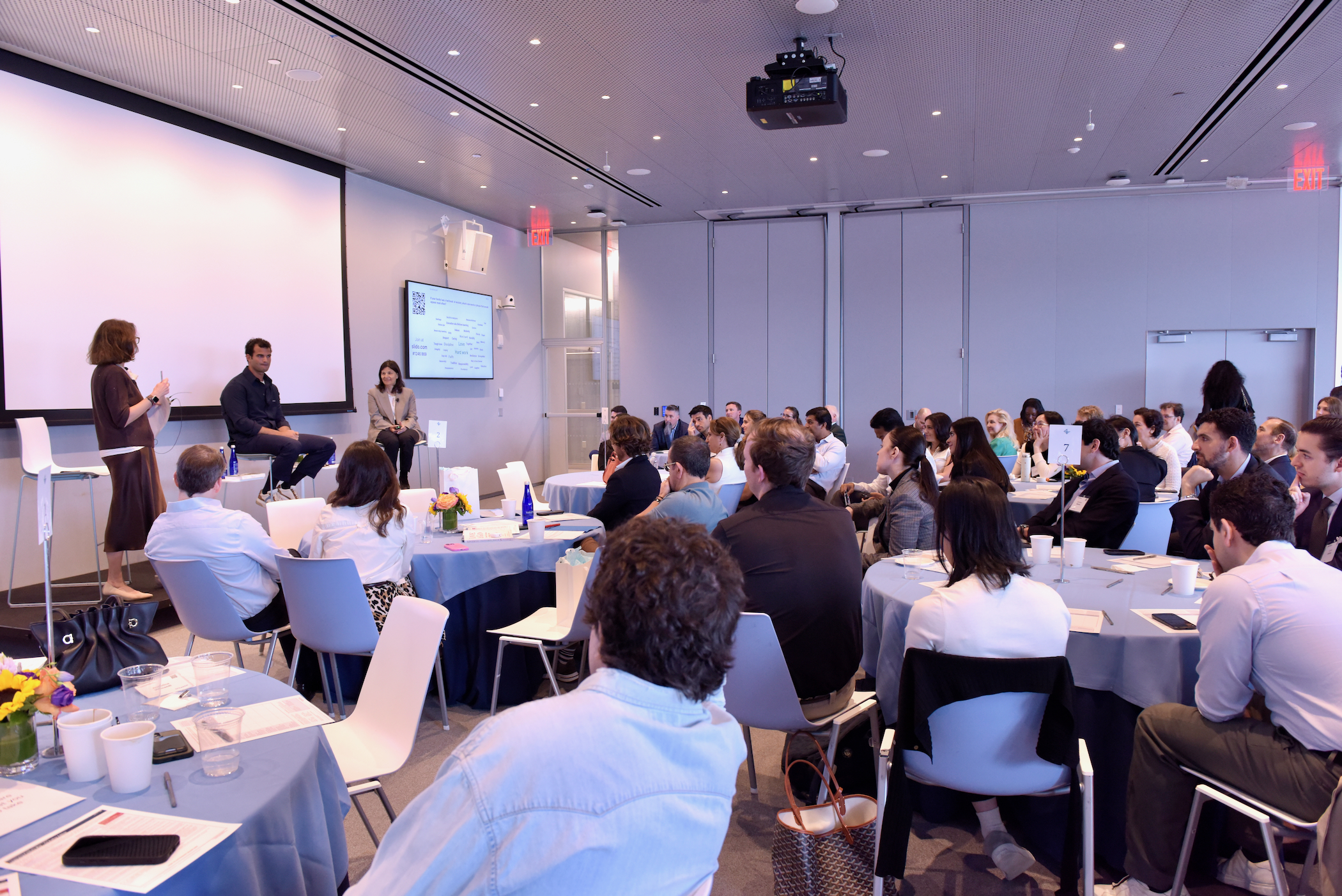
What We Build Together
The conference opened with a question that can only be explored, never fully answered: can two people who see the world differently create something together that neither could have made alone?
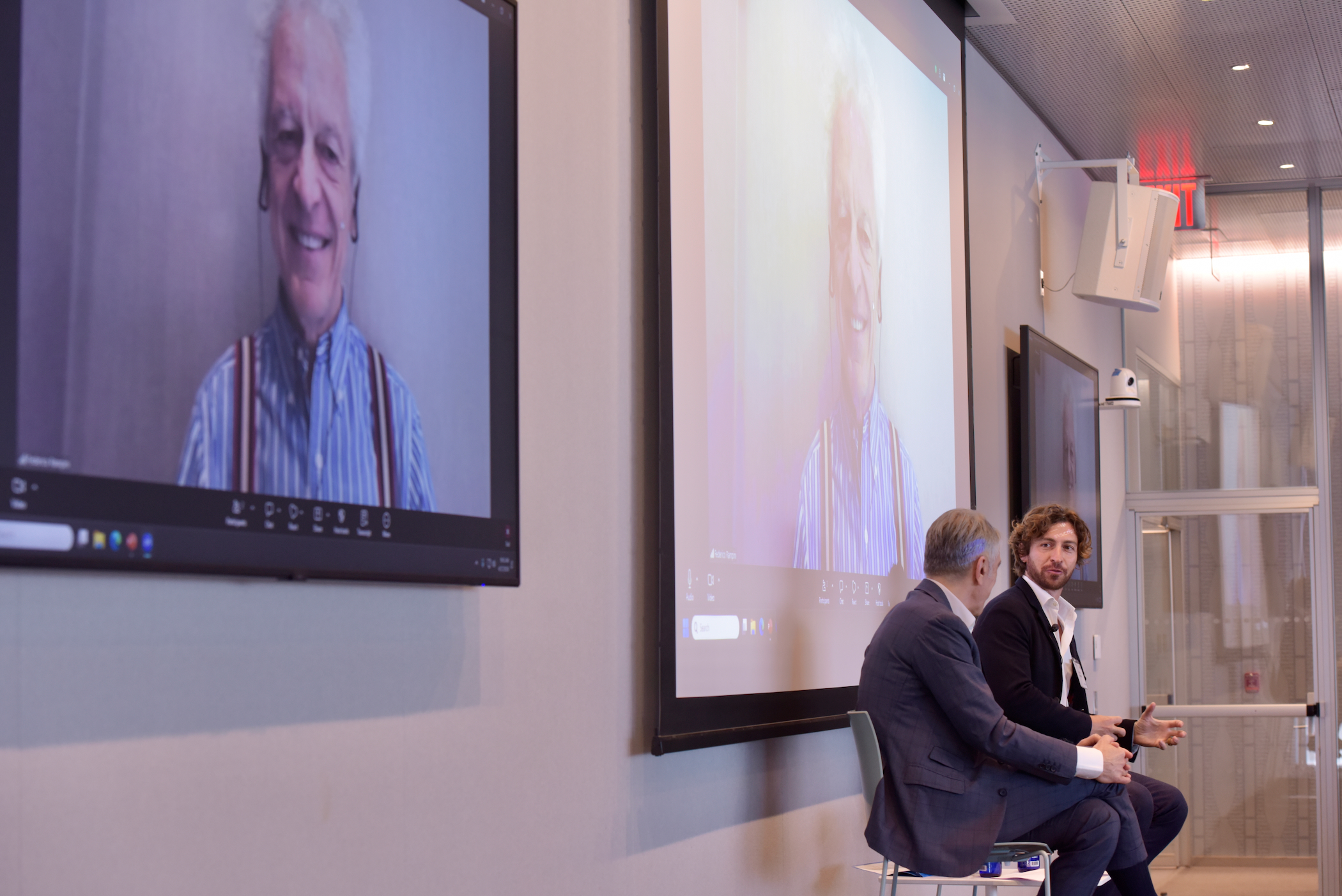
Federico and Jacopo Rampini: journalist and storyteller, father and son, joined us to reflect on the experience of co-writing a book rooted in their own relationship. Their conversation raised a theme that would run through the entire day: legacy is not inherited in a one-way transfer. It is co-authored, across difference, across generations, and often across the friction that comes with genuine closeness. The session also introduced the idea that legacy needs vehicles: objects, practices, forms that carry meaning across time. For them, it was a book. The question for every family in the room was the same: what are yours?
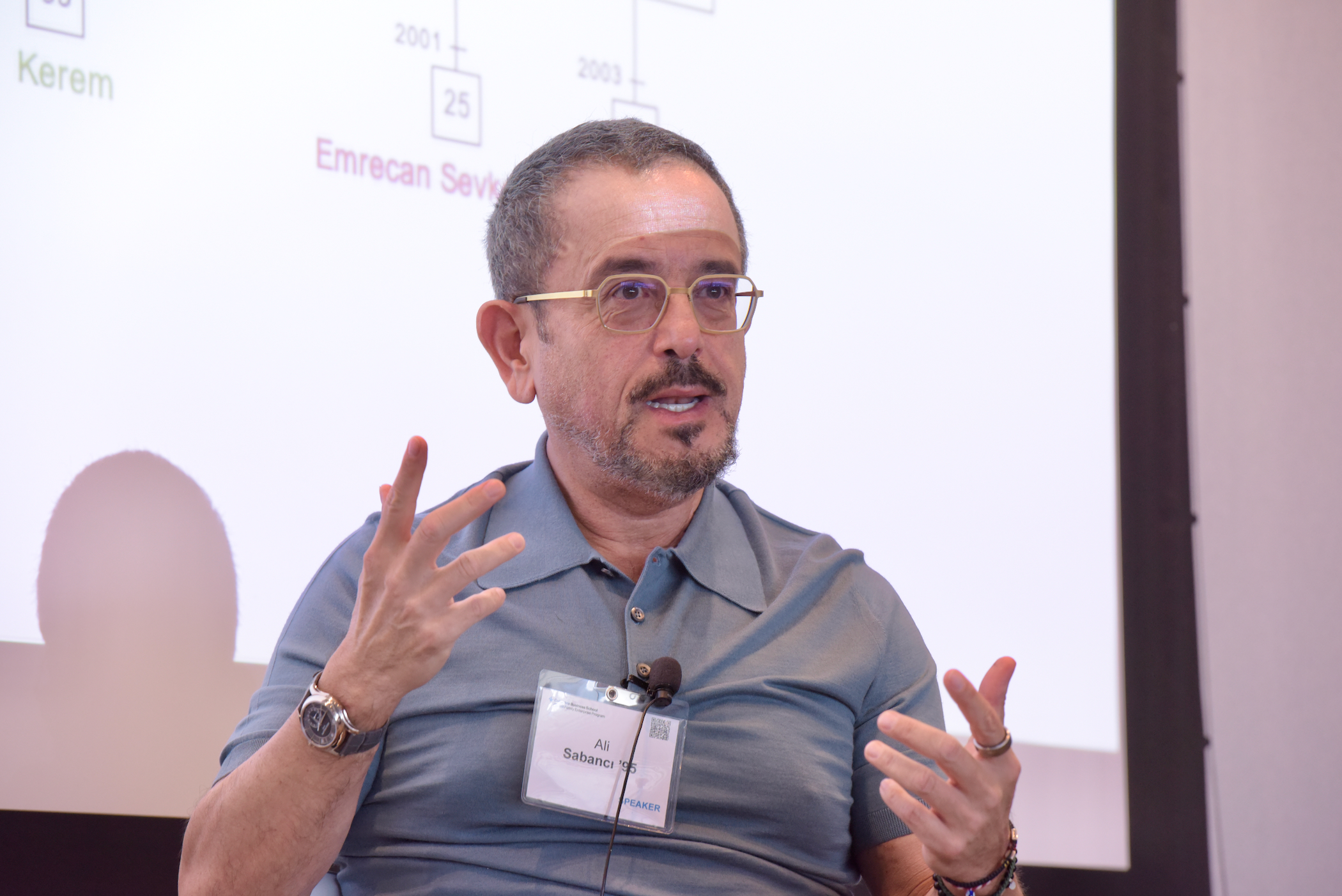
Legacying as an Act of Co-Creation
Moving from story to practice, this hands-on workshop gave participants a framework to make legacy workable, not as an abstraction, but as something that can be named, mapped, and acted upon.
Drawing on the experience of Ali Sabancı, an entrepreneur, third-generation family business member, and someone who has navigated the real distance between honoring what came before and building what must come next, participants were guided through constructing their own Legacy Map. The tool helps distinguish what a family inherits from its founder, what it carries as an enterprise, and what it may need to reinterpret or redesign. Participants used these maps throughout the rest of the day and left with a personal version to take home.
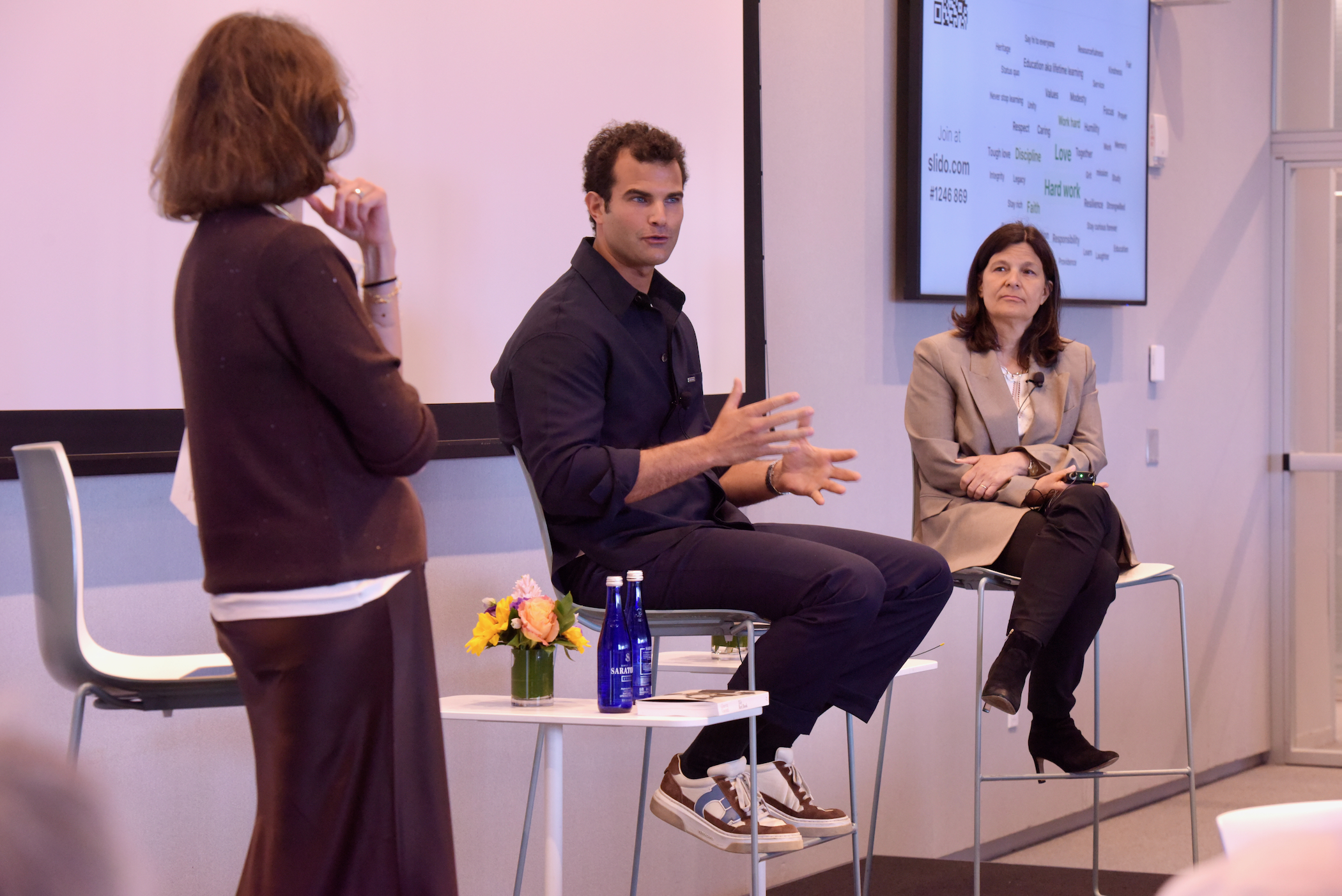
Lived as Choice, Passed as Memory
Legacy is often told as a founder's story: the visionary, the builder, the name above the door. This session offered a different lens.
Angelica and Riccardo, grandchildren of Wanda Ferragamo, spoke about what it means to receive a legacy shaped not only by business achievement, but by the character and presence of a woman who held a family together across decades. Their reflections explored how values are transmitted not through governance documents, but through memory, daily example, and the quiet decisions that accumulate into identity. It was a reminder that continuity in a great family enterprise is sustained by people, not only by structures, and that the women who shape a family's culture often do so in ways history is slow to record.
Parallel Sessions
After lunch, participants chose between two concurrent conversations, each exploring a distinct dimension of legacy in practice.
"Received with Voice, Not in Silence" brought together three next-generation women and current students to share their lived experience of inheriting enterprise legacies across cultures with distinct expectations around gender, role, and belonging. The session explored what motivates a next generation to embrace a legacy, when and why they may resist it, and what makes integration possible without the painful sense of disloyalty. It was designed not as a "next-gen session" in isolation, but as a rare opportunity for senior-generation leaders to hear directly and respectfully what helps legacy land well.
"A Home for Continuity" examined what a family office can really do for legacy beyond its operational functions. Two practitioners with distinct models explored the design choices that matter most: what to institutionalize, what to keep human, and how to ensure that structure serves a family's story rather than replacing it.
.png)
Built on Supple Grounds
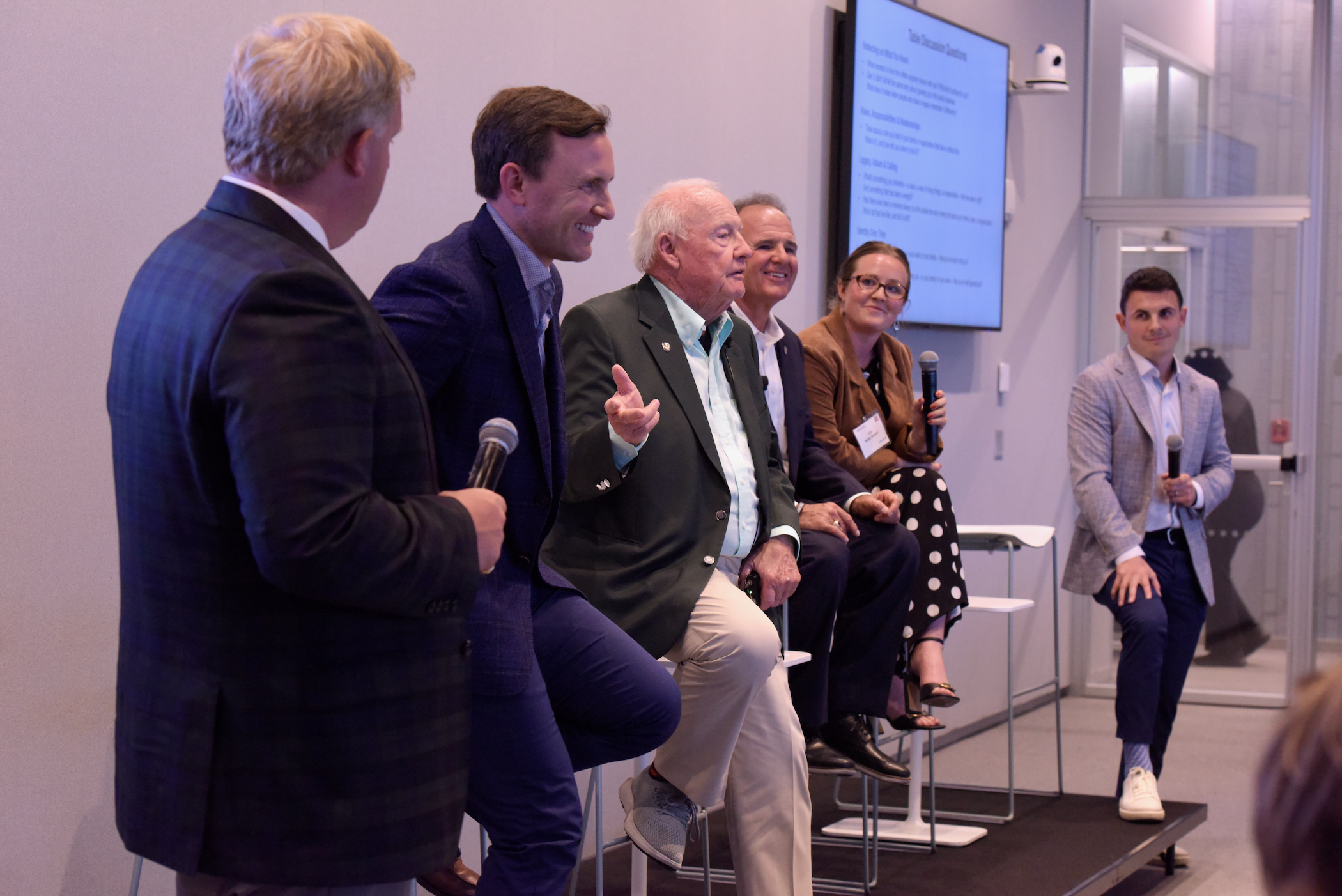
In a format rarely seen at conferences, this session brought two generations of the same family on stage together: second-generation members who were once the receivers of legacy, and third-generation cousins navigating that same terrain now.
The Kelly family's story is rooted in strong spiritual values, which adds a particular texture to the legacy conversation. When a family's foundation is built on deep conviction, it can be a powerful source of direction and unity, and it can also raise honest questions about what continuity means as a family grows, diversifies, and encounters different interpretations of shared values. The conversation explored both sides of a strong legacy: what it makes easier, and what it can make harder, and what it looks like to stay rooted while becoming more inclusive.
Keep the Force, Don't Freeze the Future
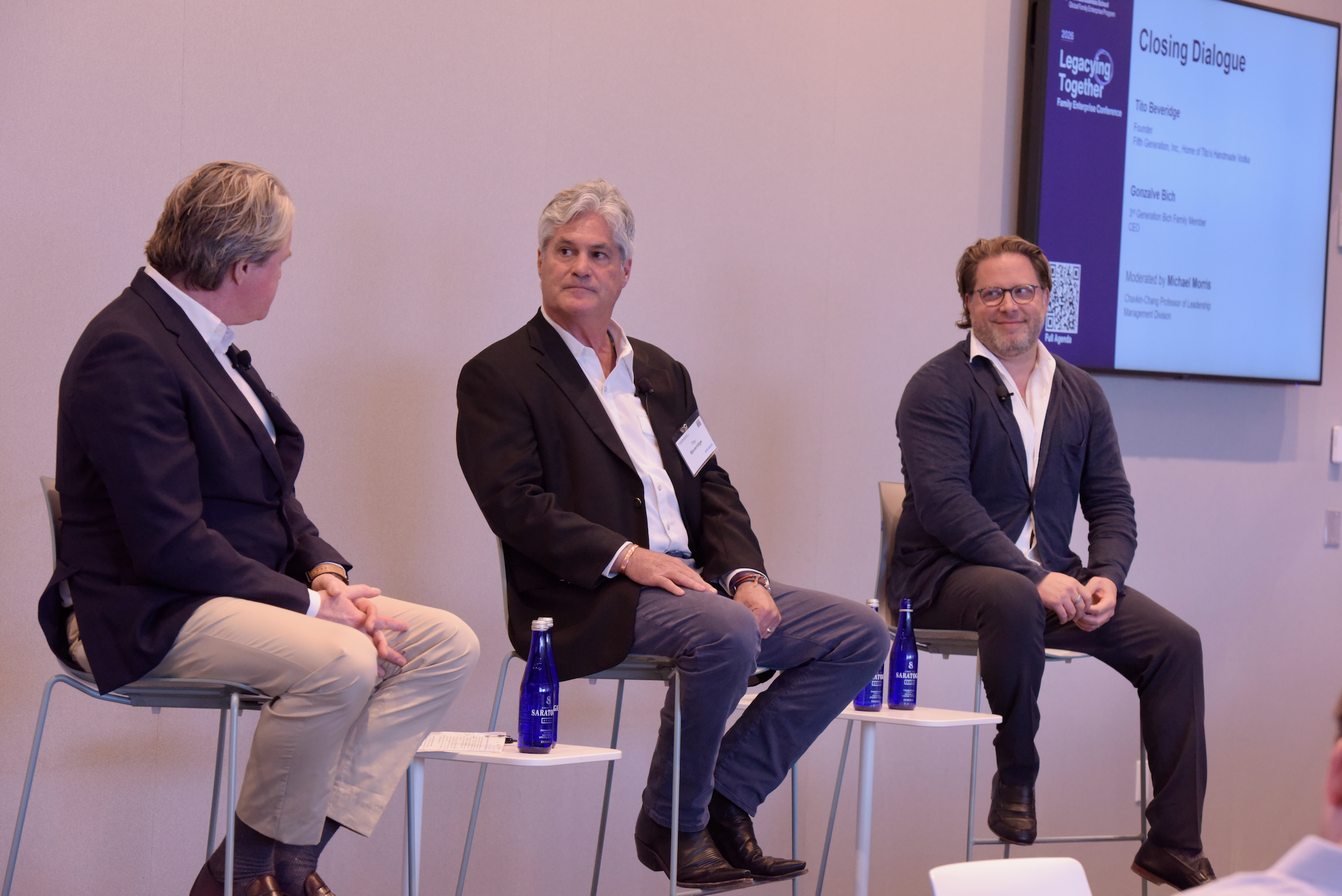
The conference closed with a conversation between two leaders who share something unusual: brand names that have become part of everyday life; and with it, a weight of public expectation that most family businesses never face.
Tito Beveridge built Tito's Handmade Vodka from zero into a global name while preserving a fierce sense of independence and purpose. Gonzalve Bich inherited one of the world's most recognized family enterprise brands and took on the task of renewing it without breaking what made it trusted and enduring. Together, they explored what a famous name does to the legacy conversation, and the closing question it raises for every family in the room: how do you pass on the founder's force without freezing the next generation in place?
What Are We Legacying from Here?
The day closed not with conclusions, but with a question deliberately left open: the same one that had been quietly present in every session.
Global Family Enterprise Program Founding Director Patricia Angus reminded participants that legacy is not a destination. It is a practice, renewed in every decision, every conversation, every moment of honest exchange between people who share something and want to steward it well. What the 2026 CBS Family Enterprise Conference offered was not answers, but better questions, and a room full of people genuinely committed to asking them.
We are grateful to every speaker, participant, and family who brought their story into the room.
The 2026 CBS Family Enterprise Conference was conducted under Chatham House rules. All session descriptions reflect the themes and questions explored, not the specific views or disclosures of any individual participant.