Official Logo of Columbia Business School
Students
  • Visit Students
  • Degree Programs
  • AI and Student Life at CBS
  • Admissions
  • Tuition & Financial Aid
  • Campus Life
  • Career Management
Faculty & Research
  • Visit Faculty & Research
  • Academic Divisions
  • MBA Transformed
  • Search the Directory
  • Research
  • Research Resources
  • Teaching Excellence
Executive Education
  • Visit Executive Education
  • For Organizations
  • For Individuals
  • Program Finder
  • Online Programs
  • Certificates
About Us
  • Visit About Us
  • CBS Directory
  • Events Calendar
  • Leadership
  • Our History
  • The CBS Experience
  • Newsroom
Alumni
  • Visit Alumni
  • Update Your Information
  • Lifetime Network
  • Alumni Benefits
  • Alumni Career Management
  • Women's Circle
  • Alumni Clubs
Insights
  • Visit Insights
  • AI & Transformative Tech
  • Climate
  • Business & Society
  • Entrepreneurship
  • Finance & Investing
  • Magazine
Plastics Hero Landing Image

Plastics

Climate Knowledge Initiative
  • Topics
    • Biofuels
    • Cement
    • Carbon Capture
    • AI Data Centers
    • Minerals
    • Nuclear
    • Solar
    • Sustainable Proteins
    • Steel
    • Energy Storage
    • Wind
    • Geothermal
    • Plastics
  • Insights
  • Features
  • Cases
  • Videos
  • About
    • Team
    • Contact
    • Content List
  • More 

Current systems generate ~450 Mt of plastics and ~2 Gt CO2e, projected to grow significantly if current trends continue.

Jump to main content
Plastics Photo Image
Image removed.

Plastics' Fossil Dependency

  • Plastics are overwhelmingly fossil-based, with approximately 99% of plastics derived from fossil fuels. ~20% of plastic emissions are tied to upstream feedstock extraction/mining
  • ~70% of emissions are tied to the energy-intense production process, which requires high temperatures. Polymer cracking is the most energy-intense stage, with >30% of emissions coming from this production stage
Executive Summary
Plastics Deck (PDF)
Plastics Deck (PPT)
Explore Key Insights

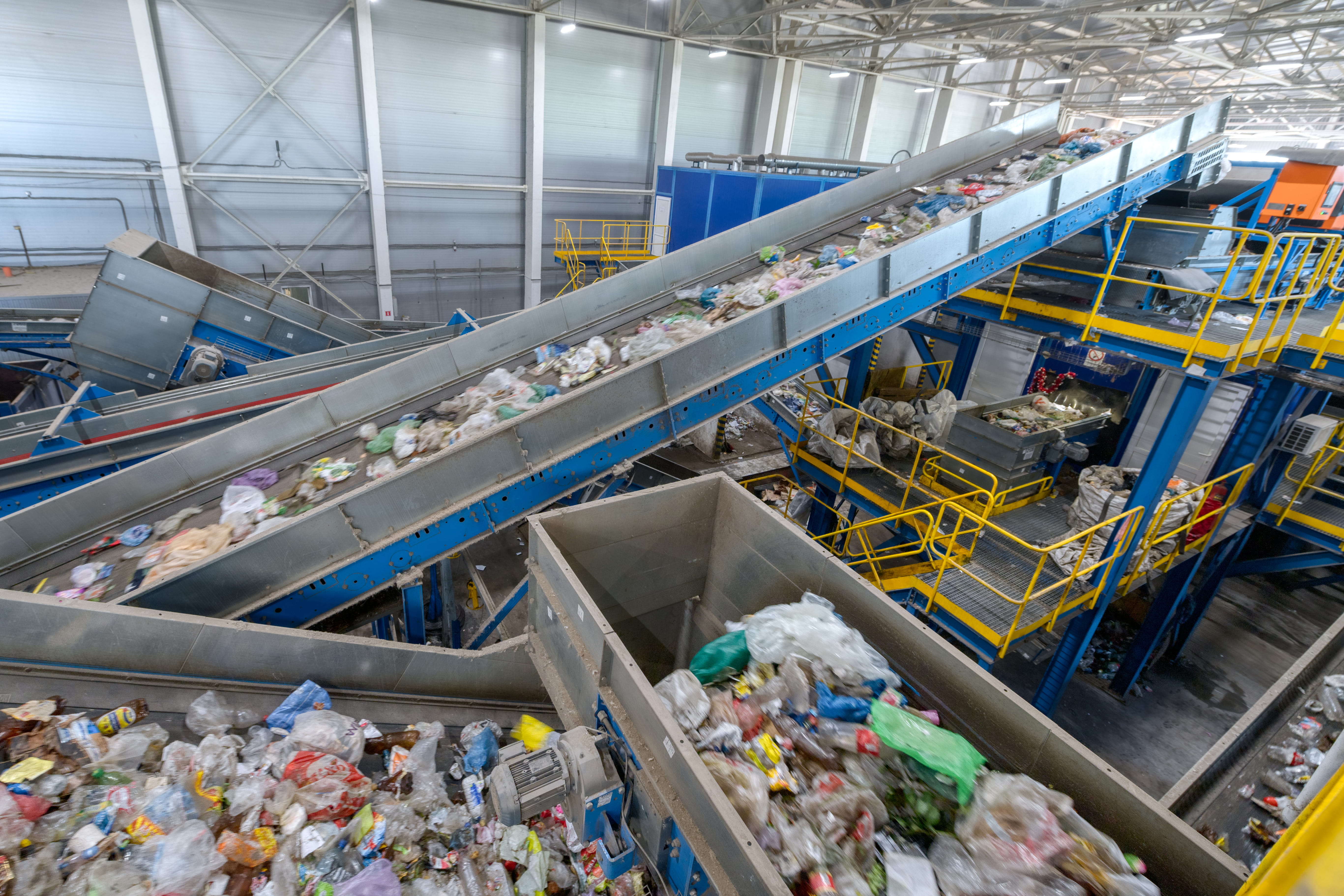
From 1950 to 2025, global plastic production multiplied from ~1.5 million to ~450 million metric tons — one of the fastest material expansions in industrial history. It’s become embedded across nearly every sector of the global economy, underpinning food systems, healthcare, mobility, and manufacturing
Plastics Photo Image
To abate plastic’s emissions, reduce demand first, then decarbonize residual production
Markets will not correct plastic overproduction on their own
Circular systems could reduce plastics ’ emissions by 60 to 70 percent

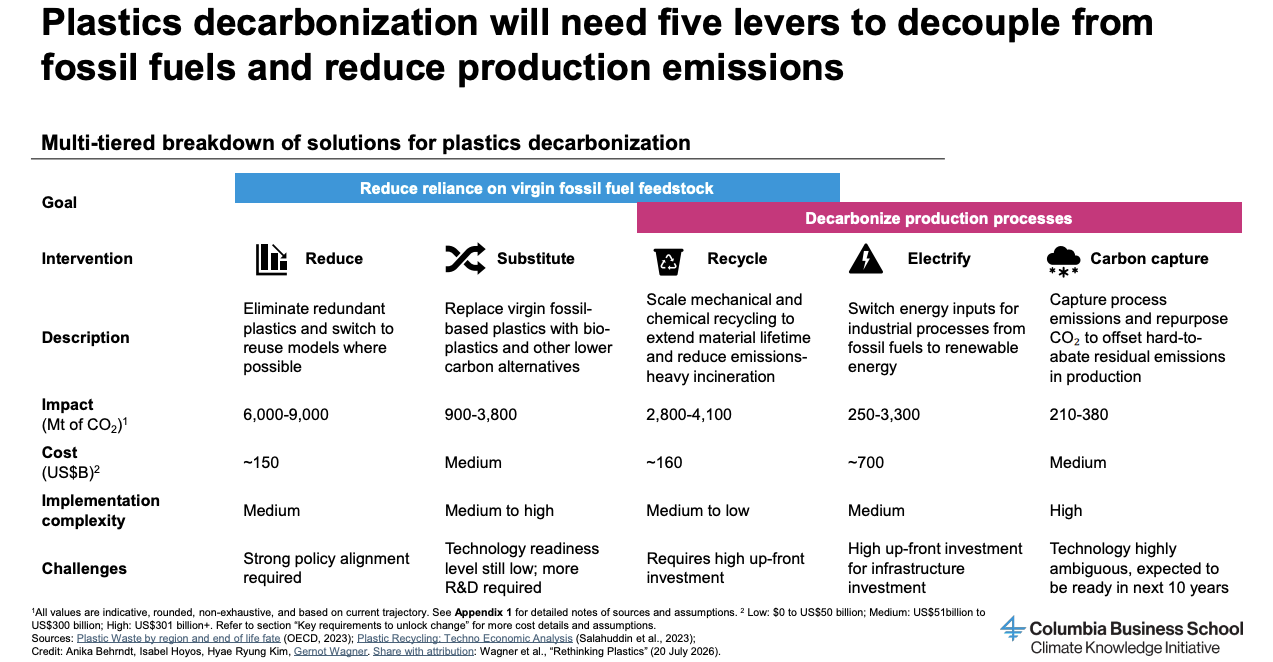
To abate plastic’s emissions, reduce demand first, then decarbonize residual production

The plastics industry’s emissions derive from the extraction of fossil fuels, the petrochemical production process, and emissions associated with plastic waste and end-of-life treatments. Tackling each element is important, pointing to solutions from material substitution to electrification to recycling to CCUS. But there is one underlying driver: demand.
Plastics Slide 3 Image

View the Article

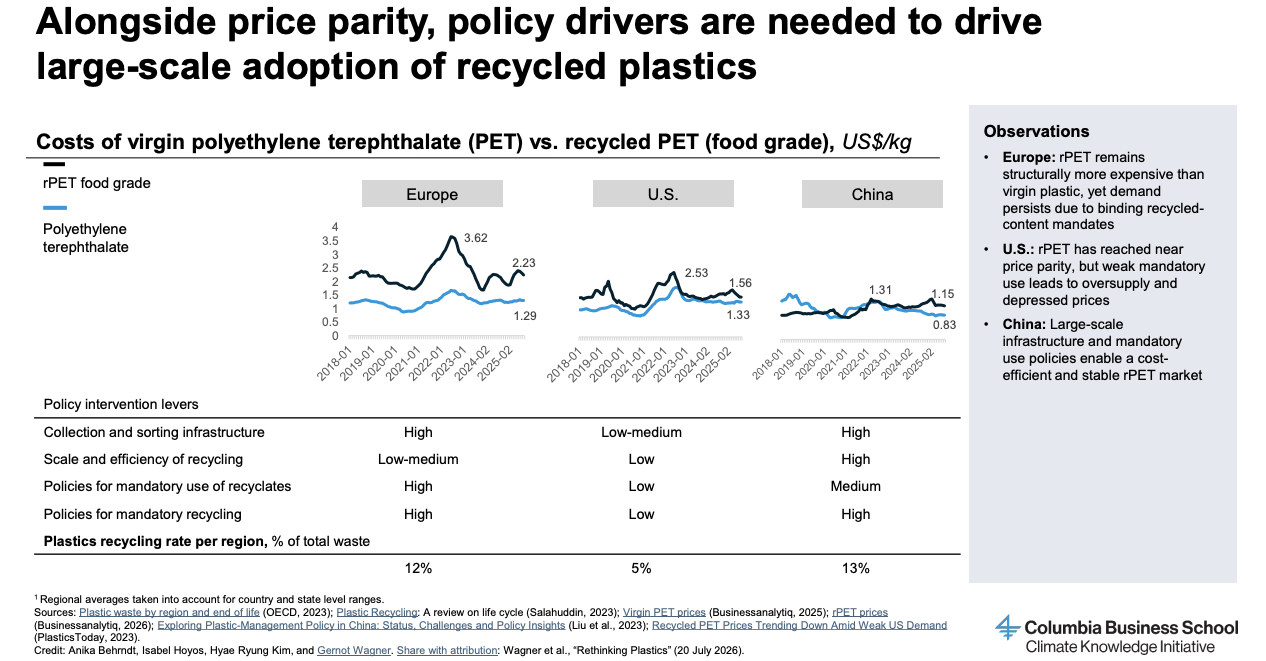
Markets will not correct plastic overproduction on their own

Plastic overproduction is not simply a function of consumer demand but of distorted market incentives. Virgin fossil-based plastics often do not reflect the full environmental costs associated with their production, use, and disposal, and as a result, markets alone are unlikely to drive a meaningful shift toward lower emission alternatives.
Plastics Slide Image

View the Article

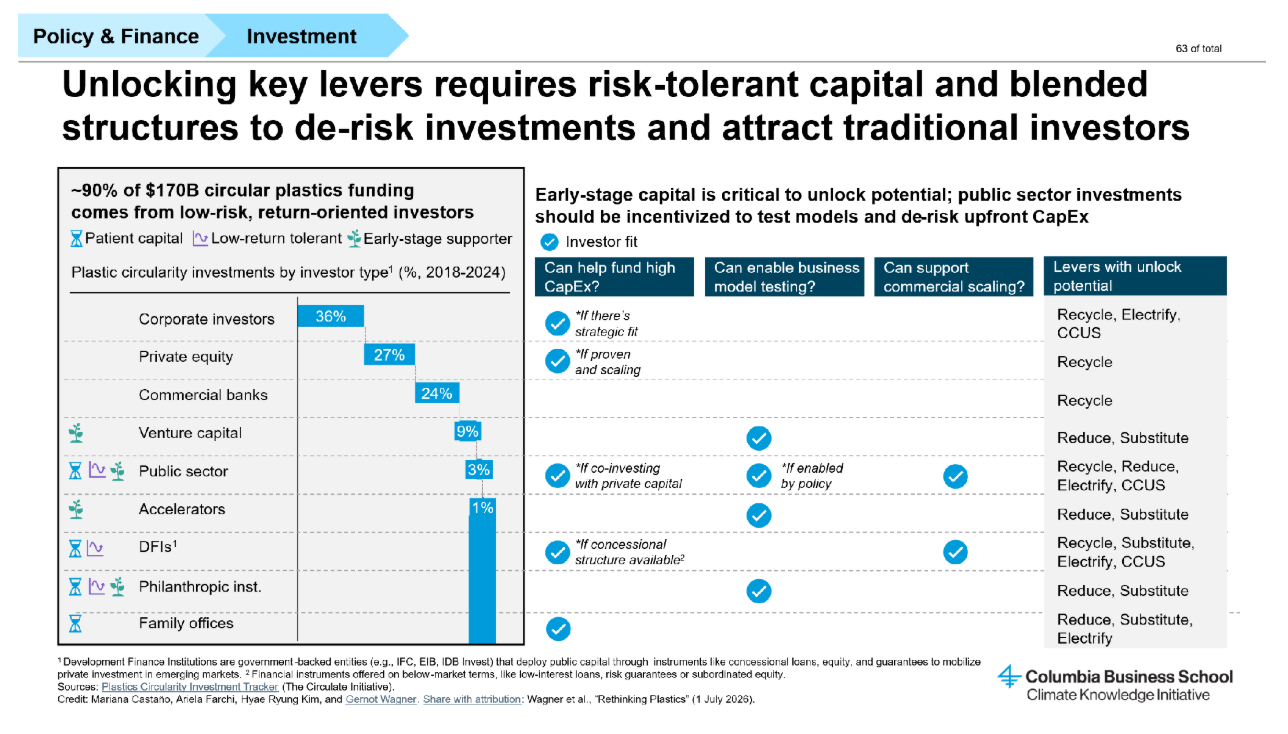
Circular systems could reduce plastics’ emissions by 60 to 70 percent

Circularity is best understood as a system condition: Materials remain in use at high value, and demand for virgin production is structurally reduced. This could reduce plastics-related emissions by ~60 to 70 percent but requires significant infrastructural investment.
Plastics Slide 10 Image

View the Article

Dive Into the Resources
Plastics After Oil Article Image

Plastics After Oil

From 1950 to 2025, global plastic production multiplied from ~1.5 million to ~450 million metric tons—one of the fastest material expansions in industrial history. It’s become embedded across nearly every sector of the global economy, underpinning food systems, healthcare, mobility, and manufacturing. And the low cost of plastic has entrenched its use even in applications with limited functional necessity, like disposable cutlery, individually wrapped produce, and redundant packaging.

Structural lock-ins ensure continuous demand for virgin fossil feedstocks, while waste management costs are externalized from the petrochemicals industry onto municipalities and consumers.

Read the Article

Columbia Business Insights

Official Logo of Columbia Business School

Columbia University in the City of New York
665 West 130th Street, New York, NY 10027
Tel. 212-854-1100

Maps and Directions
    • Centers & Programs
    • Current Students
    • Corporate
    • Directory
    • Support Us
    • Recruiters & Partners
    • Faculty & Staff
    • Newsroom
    • Careers
    • Contact Us
    • Accessibility
    • Privacy & Policy Statements
Back to Top Upward arrow
TOP

© Columbia University

  • X
  • Instagram
  • Facebook
  • YouTube
  • LinkedIn

External CSS

Homepage Breadcrumb Block

Back to top

Accessibility Tools

English French German Italian Spanish Japanese Russian Chinese (Simplified) Chinese (Traditional) Arabic Bengali