

Mining for the Energy Transition
Demand for critical minerals and rare earth elements is expected to increase significantly as demand for frontier technologies and products—EVs, renewables, medical equipment, military defense, and digital devices—continues to rise. Copper is the mineral in highest demand for EVs and renewables.
Investment in the sector showed signs of slowdown in 2024, and startup funding declined, likely due to supply chain uncertainty. Meanwhile, exploration continued to increase.
Technological advances in material recovery will enable projected recycled inputs to meet up to 40% of demand by 2050. Electrification and other advances in efficiency are also critical to decarbonize.
Key Insights
Under current electrification trends, the International Energy Agency expects demand for lithium to rise about 4.5-fold by 2040 and demand for nickel, cobalt, and graphite to increase by a factor of 1 to 2.
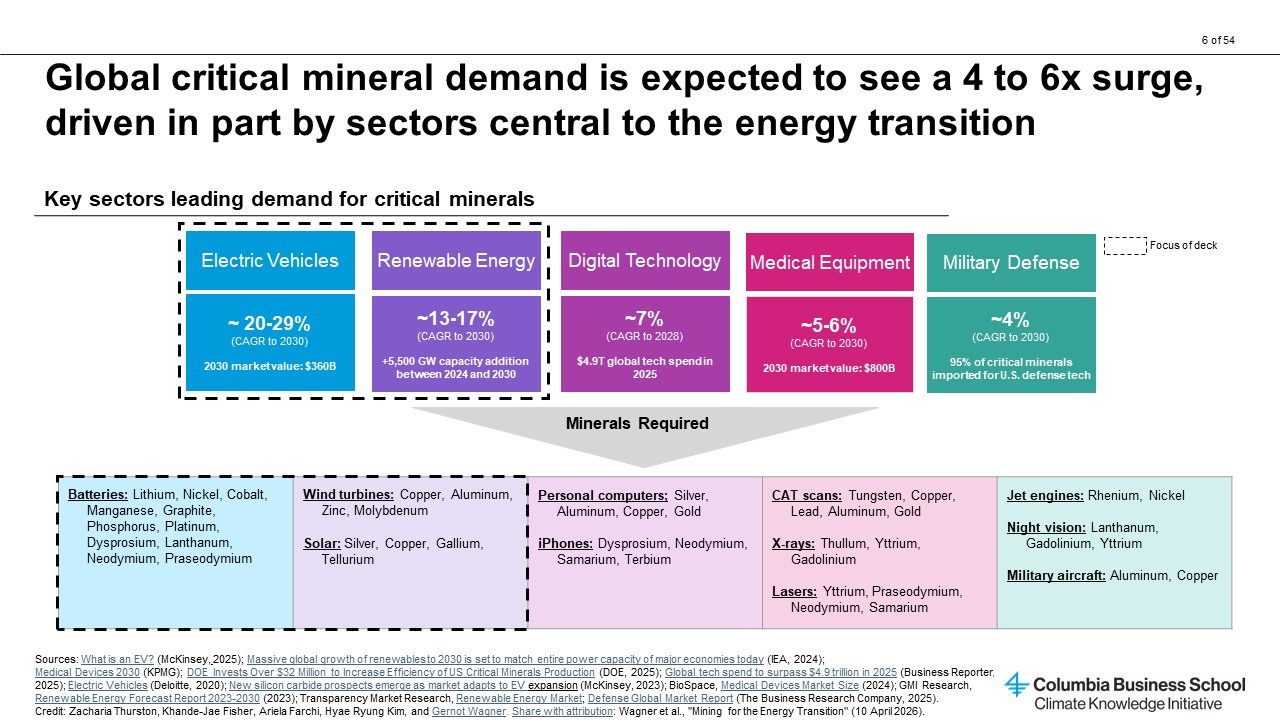
Click to enlarge slide for further details
Most of this demand is front-loaded; the total material requirement of a net zero scenario economy is almost 30 percent less than today’s predominantly fossil fuel-based one.
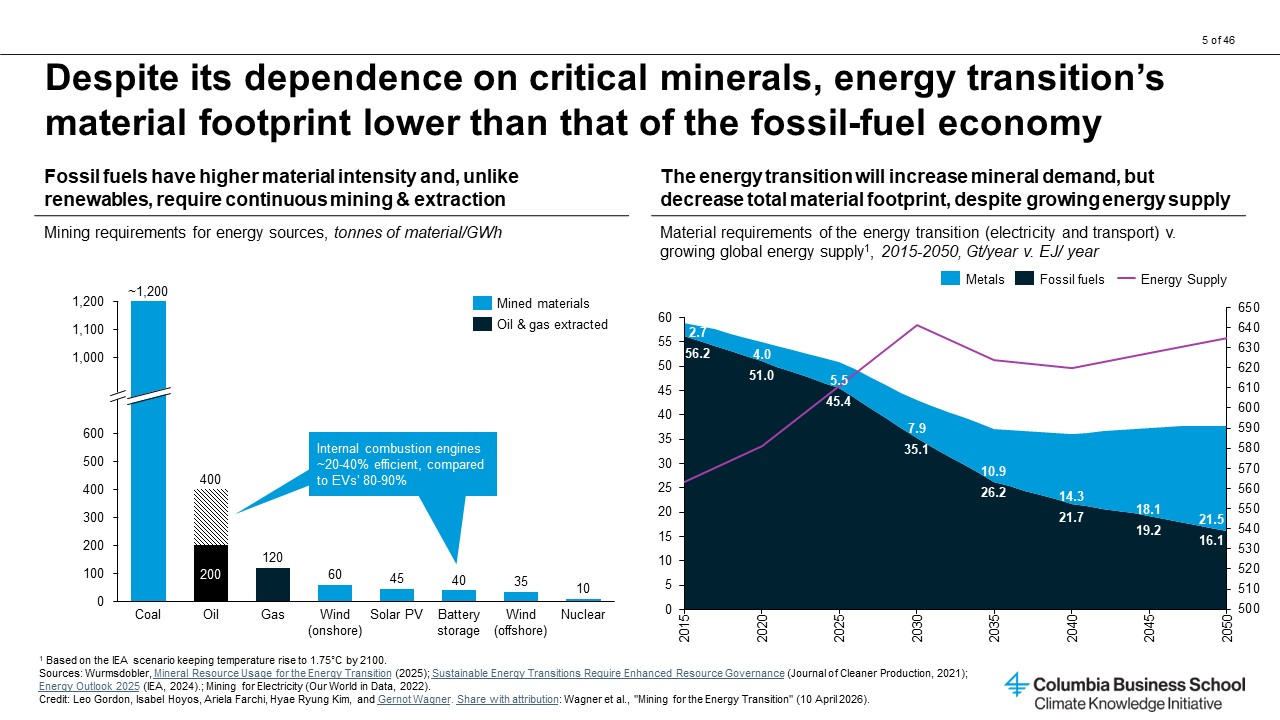
Click to enlarge slide for further details
There are currently enough known reserves to meet the projected needs of clean energy technologies through mid-century, but the gap between demand and production is widening—mining, refining, and transport infrastructure will need to scale by three to five times.
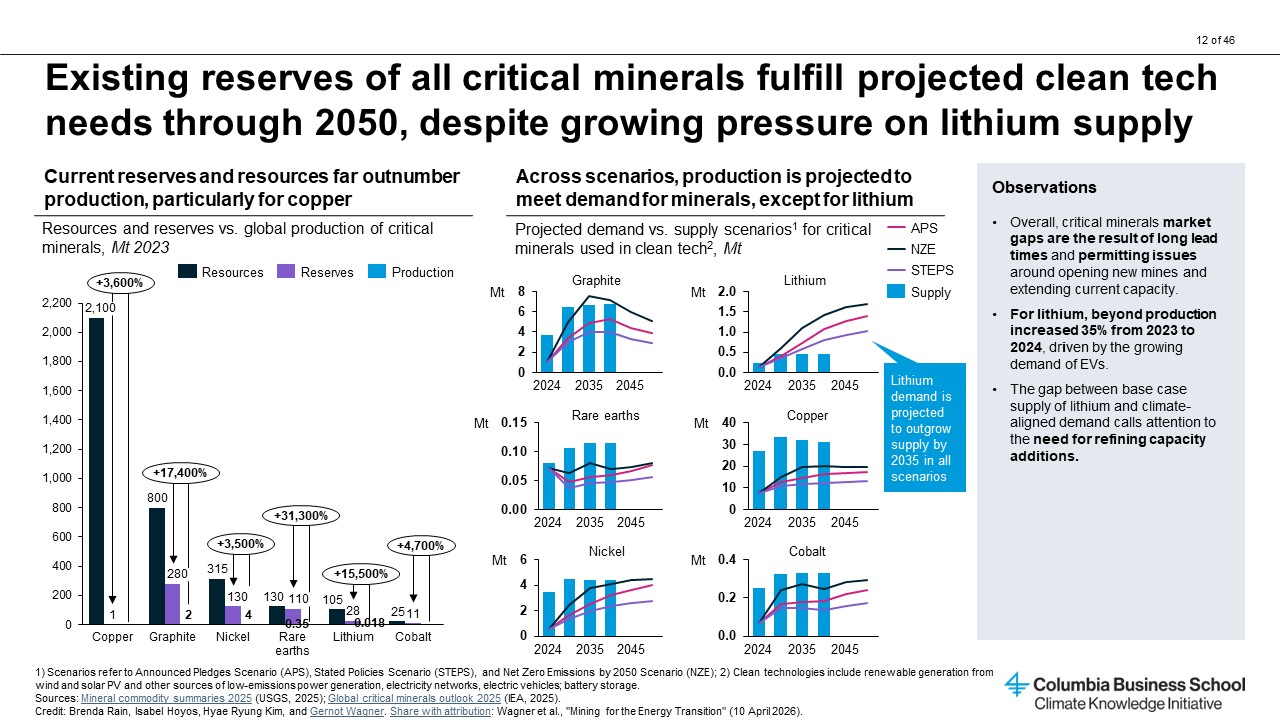
Click to enlarge slide for further details
Material efficiency, substitution, and recycling are underutilized levers for critical minerals supply.
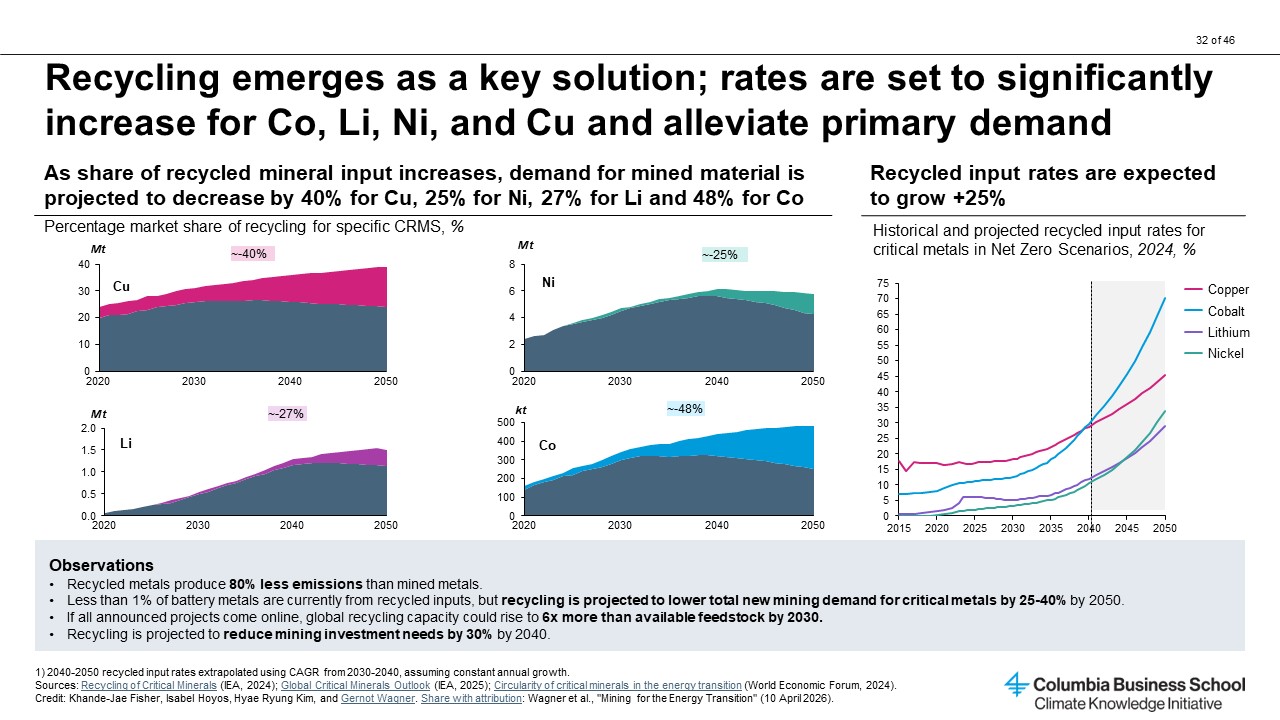
Click to enlarge slide for further details


Mining for the Energy Transition
Securing the supply of key minerals is mission critical for the clean energy transition.
Rare earth elements (REEs) are a fixed and globally consistent group of 17 metals that sit together in the periodic table—atomic numbers 57 through 71, plus adjacent 21 and 39. They are classified based on similar chemical properties, and though they’re not scarce in the earth’s crust, their deposits are rarely concentrated enough for economical extraction, thus, earning the description rare.