


Meeting AI Power Demand
Since the late 20th century, electricity demand in advanced economies has remained relatively stagnant, especially in the United States and Europe. Efficiency gains in appliances, lighting, and manufacturing have offset population growth, leaving overall demand almost unchanged for decades. The digital boom of the early aughts and subsequent decade brought modest upticks from server farms and data centers but nothing that fundamentally altered the trajectory.
With massive computational intensity and a steep adoption curve, AI is a different story. In its 2025 World Energy Outlook report, the International Energy Agency’s (IEA) forecast for global electricity generation by 2035 under the “stated policies” scenario increased ~9 percent from its 2023 forecast, up from 40,494 terawatt-hours to 44,274 TWh, largely driven by AI data center requirements.
The power-hungry data centers that train large AI models are driving investments in electricity generation. Whether this locks in new fossil fuel capacity for decades to come or propels the energy transition will depend on how fast developers can deliver new clean electrons.
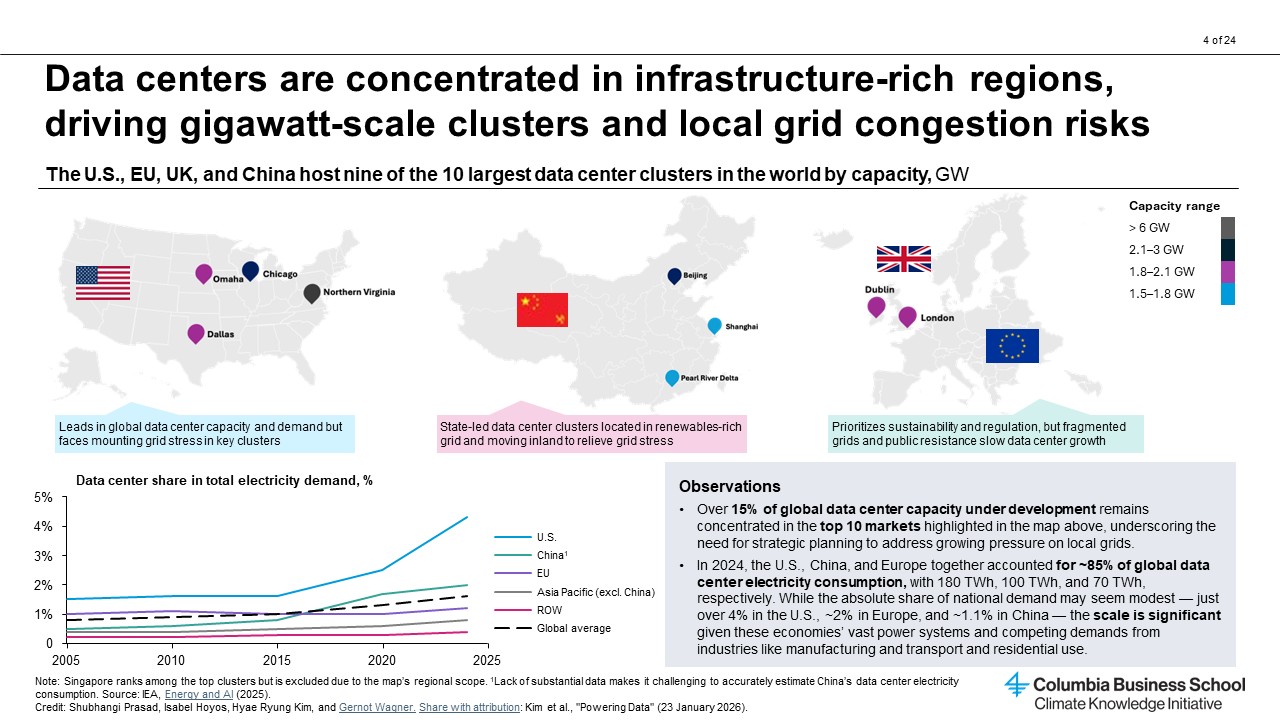
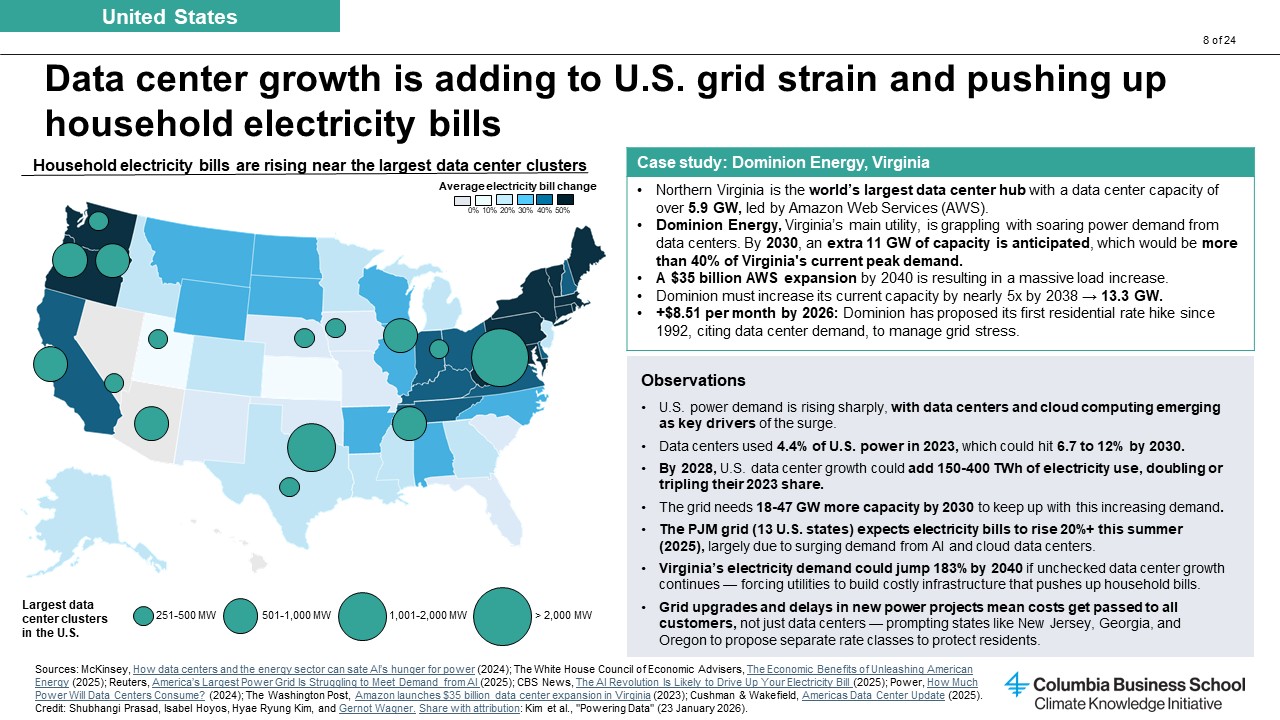
The United States is home to the world’s largest hyperscale data center market, with the biggest cluster located in Northern Virginia’s so-called Data Center Alley. But rapid growth is straining energy infrastructure, with electricity demand from power-hungry centers outpacing supply and households in these regions facing both rising energy bills and the risk of grid failures. One way developers are responding is by adopting “power-first” siting strategies, selecting sites based on power availability.
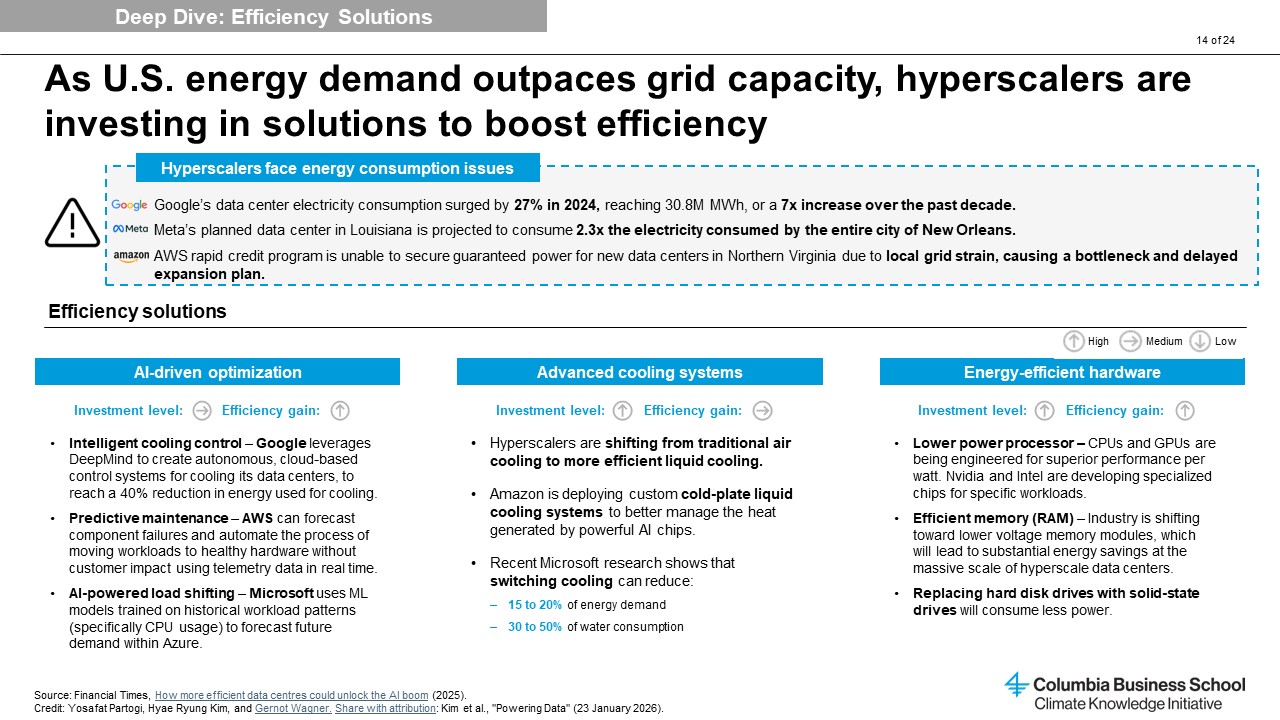
Efficiency, though not a true decarbonization solution, is a lever data centers can use to partially decouple growth in computing power from energy demand and, thus, emissions. Hyperscalers are constantly improving hardware, software, and cooling systems to extract more performance per watt, with the industry benchmark, Power Usage Effectiveness (PUE), improving steadily. Cooling innovations, able to reduce energy use by up to 40 percent, are proving particularly effective.
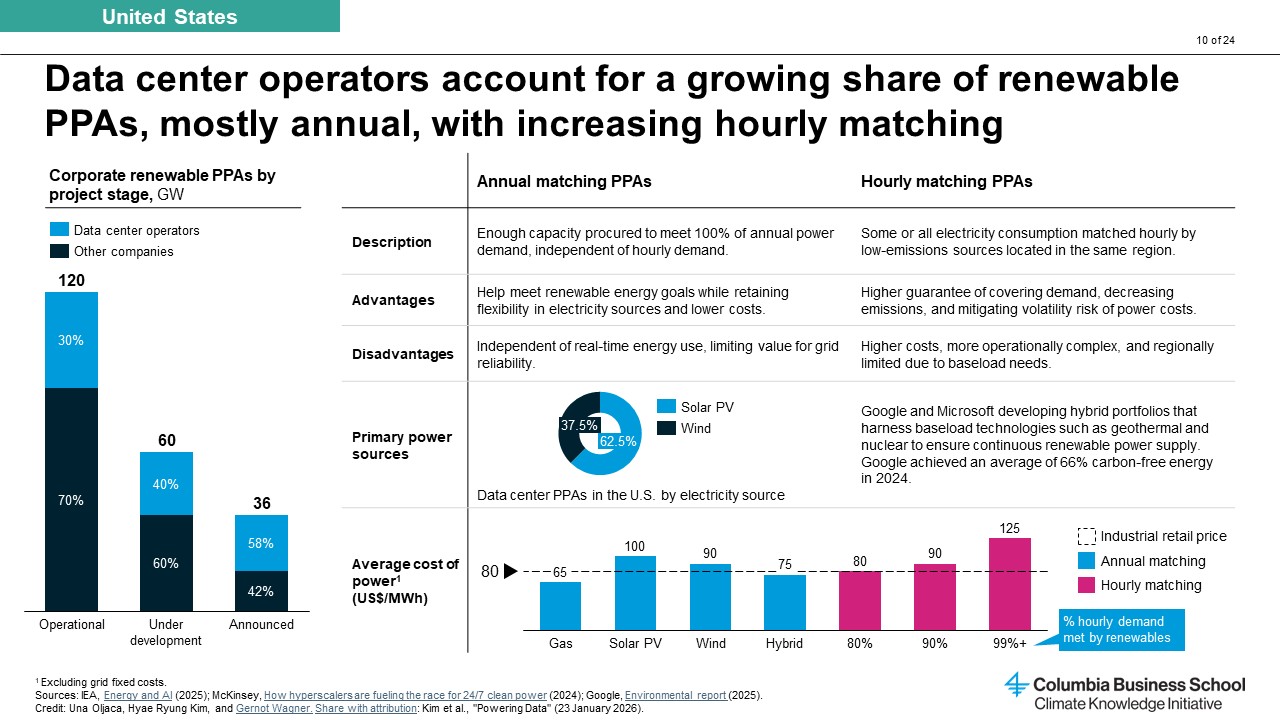
In the United States, Amazon, Microsoft, Google, and Meta account for more than half of all new renewable energy deals. They are using their power as the largest corporate buyers of energy to help finance solar, wind, and, increasingly, geothermal and nuclear projects through long-term PPAs. This creates a powerful, creditworthy demand signal for new clean energy projects.
The urgency of AI's power demand is driving tech companies to pursue an "all of the above" energy strategy that's breathing new life into the fossil fuel industry and raising costs for consumers.

The Race to Power Data Centers
Artificial intelligence is reshaping the global economy and the energy system that powers it. Hardly a week goes by without a hyperscaler announcing a new energy deal to revive an old nuclear power plant or build new geothermal capacity, or signing a power purchase agreement (PPA) to support the demand expected by yet another data center.
The very term hyperscaler suggests that something new is afoot for electricity suppliers: Companies like Amazon, Google, Meta, and Microsoft and the many dedicated data center operators prize flexibility as much as cheap, firm power supplies. The big question is how much they also prize clean power—and which price they are willing to pay. Explore further below.