Official Logo of Columbia Business School
Students
  • Visit Students
  • Degree Programs
  • AI and Student Life at CBS
  • Admissions
  • Tuition & Financial Aid
  • Campus Life
  • Career Management
Faculty & Research
  • Visit Faculty & Research
  • Academic Divisions
  • MBA Transformed
  • Search the Directory
  • Research
  • Research Resources
  • Teaching Excellence
Executive Education
  • Visit Executive Education
  • For Organizations
  • For Individuals
  • Program Finder
  • Online Programs
  • Certificates
About Us
  • Visit About Us
  • CBS Directory
  • Events Calendar
  • Leadership
  • Our History
  • The CBS Experience
  • Newsroom
Alumni
  • Visit Alumni
  • Update Your Information
  • Lifetime Network
  • Alumni Benefits
  • Alumni Career Management
  • Women's Circle
  • Alumni Clubs
Insights
  • Visit Insights
  • AI & Transformative Tech
  • Climate
  • Business & Society
  • Entrepreneurship
  • Finance & Investing
  • Magazine
Power Grids Landing Image

Power Grids

Climate Knowledge Initiative
  • Topics
    • Biofuels
    • Carbon Capture
    • Cement
    • Energy Storage
    • Geothermal
    • Minerals
    • Nuclear
    • Plastics
    • Power Grids
    • Solar
    • Steel
    • Sustainable Proteins
    • Wind
  • Insights
  • Features
  • Cases
  • Videos
  • About
    • Team
    • Contact
    • Content List
  • More 

Modern power grids must adapt to growing demand, a changing energy landscape, aging infrastructure, and extreme weather while delivering power that maximizes security and minimizes emissions and costs.

Jump to main content
Power Grid Photo Image

Rewiring the Power Grid

Global grids must adapt to rapidly growing electricity demand, aging infrastructure, a shift toward more distributed energy systems, and increasingly severe weather events. AI and data centers, electrification of transport and heating, and other new sources of demand are putting additional pressure on the grid, while much of the existing infrastructure is reaching the end of its design life. 

At the same time, the transition to a more decentralized and multidirectional electricity system and the need to strengthen grids against extreme weather require significant investment and modernization.

Executive Summary (PDF)
Executive Summary (PPT)
Power Grids Key Insights

Global electricity demand is entering a new era of growth, with electrification, data centers, and other emerging loads driving rising demand across nearly all major regions, and a recent CKI workshop on Power Grids explored how grids can keep pace, what can be optimized today, what needs to be modernized, and where expansion is unavoidable.
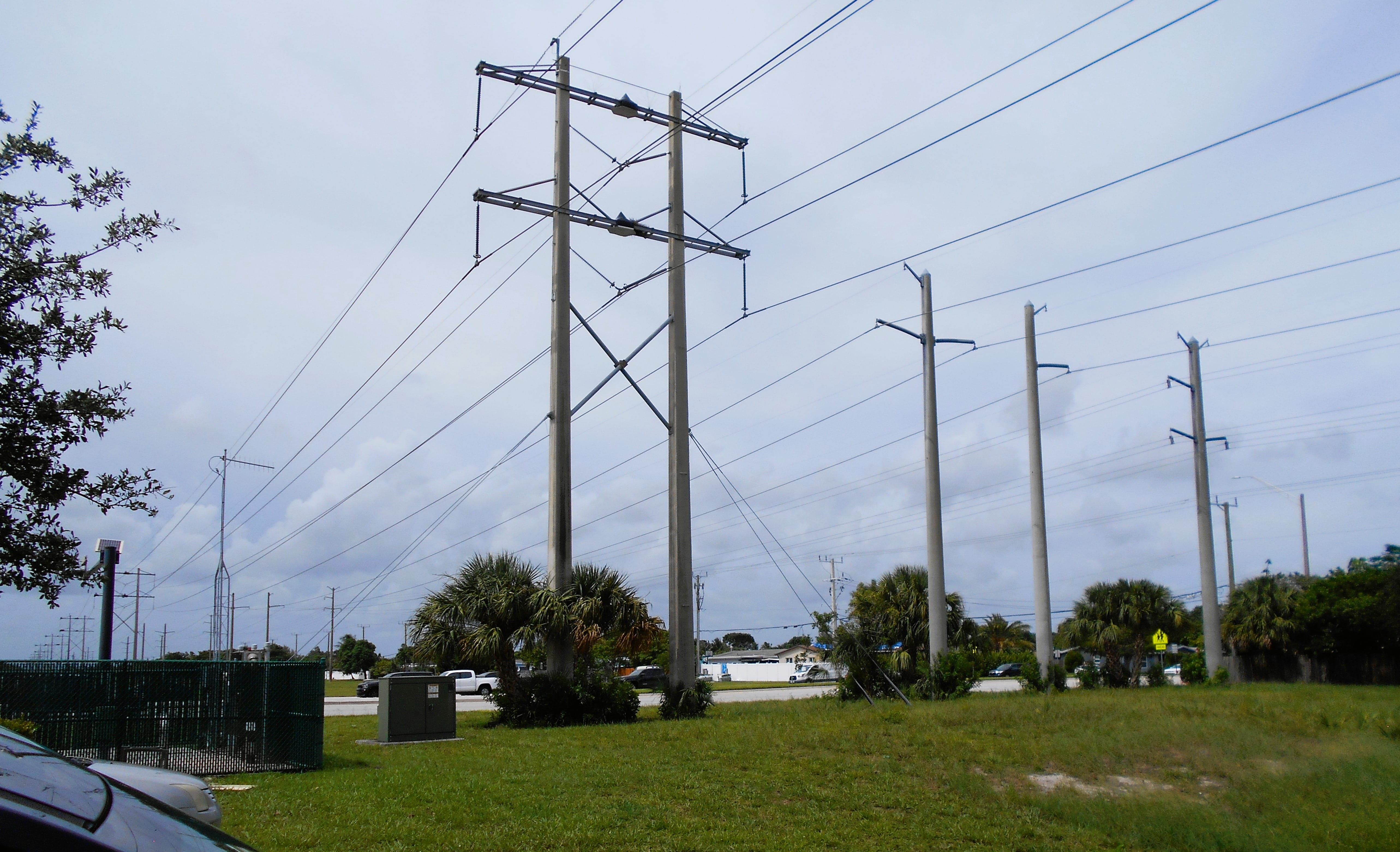
Power Grids Key Insights Photo Image
Key Point 1: Massive demand growth from AI is compounding the pressures on the grid – and also showing promise as a tool to make grids more efficient.
Key Point 2: Short-term solution: AI-enabled optimization is fastest and cheapest, but it only closes a fraction of the gap.
Key Point 3: Medium-term solution: Modernizing the grid means redesigning markets and incentives — and agreeing on who pays.
Key Point 4: Long-term solution: No matter what, the clean energy transition will require a slow and expensive expansion of the physical grid.

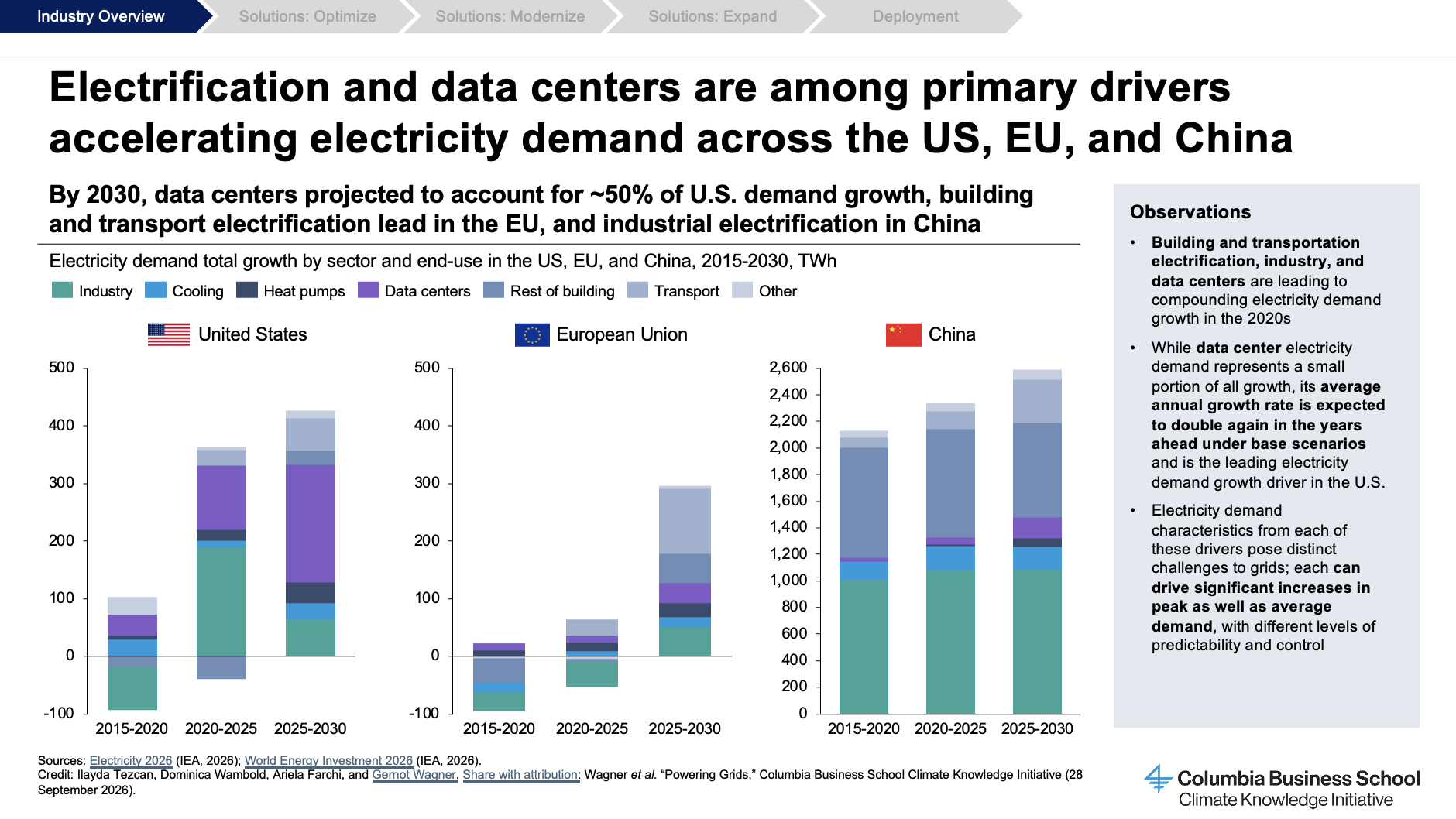
AI (and the data centers that power it) are adding urgency to the drive to update the grid because of their massive demand requirements — and those same forces may apply the pressure to finally fix it. By 2030, data centers are projected to account for roughly half of U.S. demand growth, and the scale and urgency of that demand is doing something federal grants alone haven't: it’s forcing utilities, regulators, and investors to treat grid investment as unavoidable rather than optional.
CKI Power Grid Analysis

Click to enlarge slide for further details

Explore Key Insights Further
Download the Executive Summary

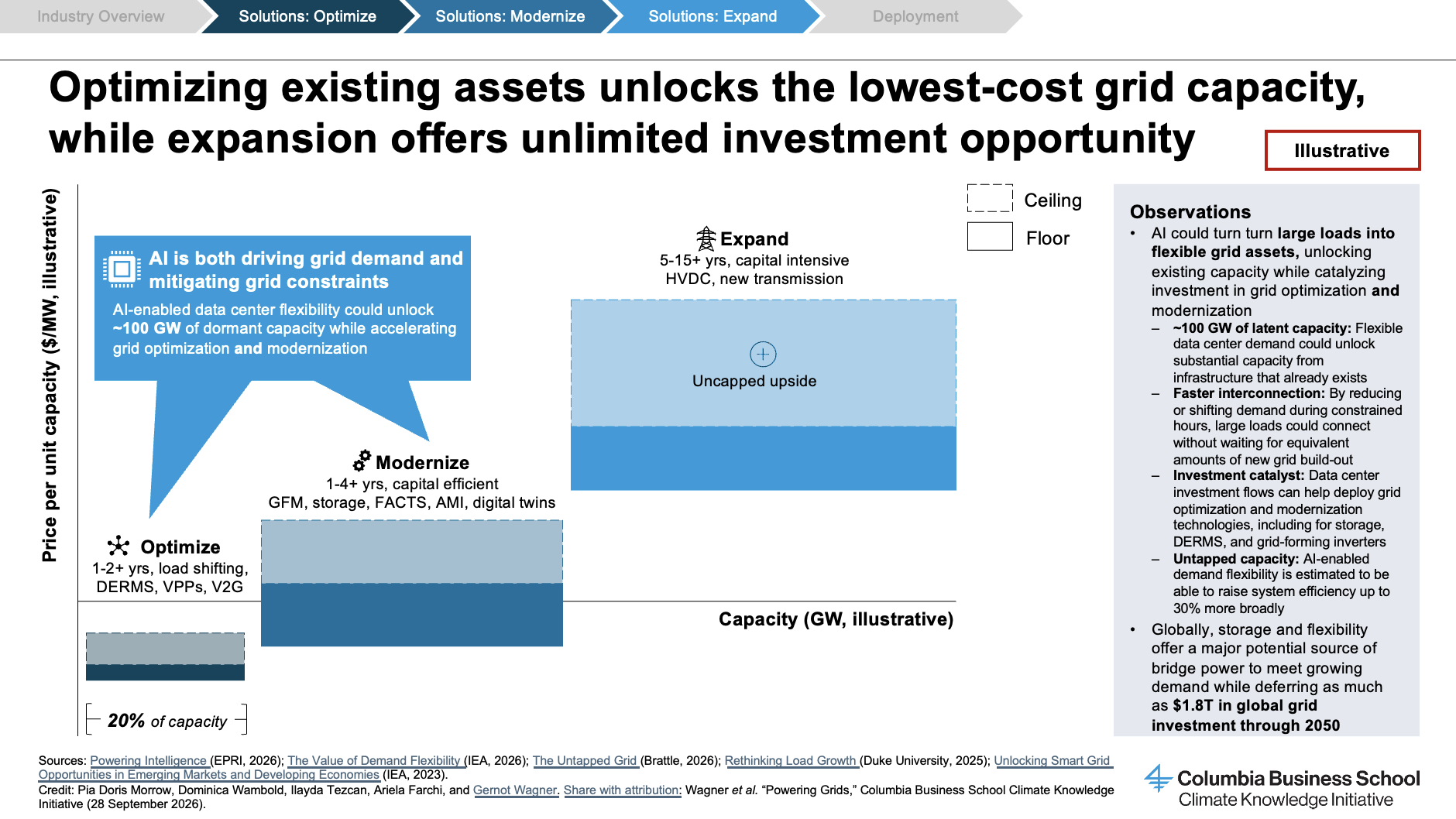
Of the three levers, optimization is the one utilities and developers can pull almost immediately. It means squeezing more capacity out of infrastructure that already exists, largely through software like load-shifting tools, distributed energy resource management systems (DERMS), virtual power plants (VPPs), and other forms of demand response (DR).
CKI Power Grid Analysis

Click to enlarge slide for further details

Explore Key Insights Further
Download the Executive Summary

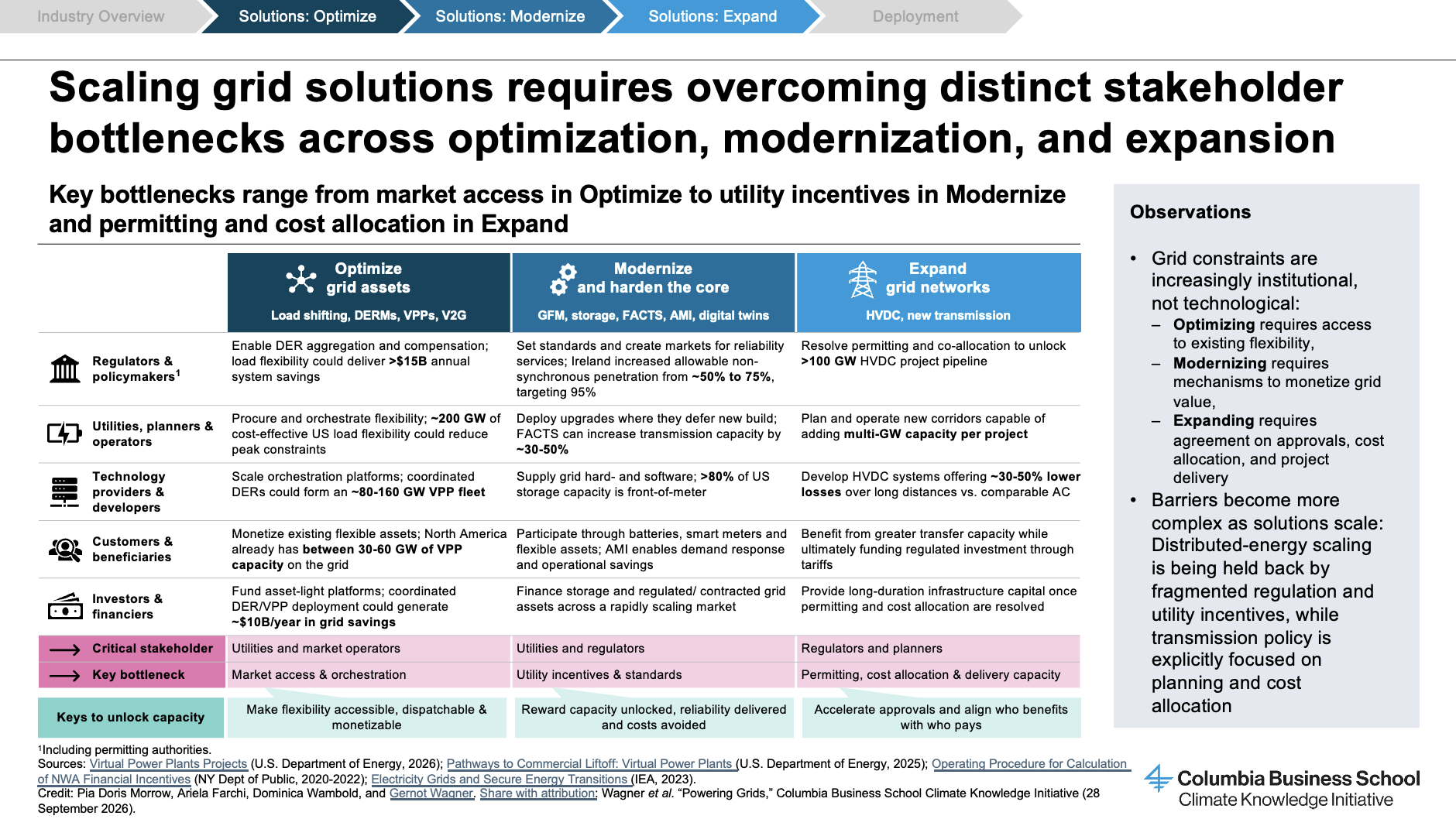
The “modernization” lever concerns the hardware layer just above optimization: grid-forming inverters, grid-scale battery storage, flexible AC transmission systems, advanced metering, digital twins. It is more capital-intensive than optimization, requiring an estimated $200 billion to $400 billion a year globally between 2030 and 2035, but still faster to deploy than large-scale grid expansion.
CKI Power Grid Analysis

Click to enlarge slide for further details

Explore Key Insights Further
Download the Executive Summary

Even with aggressive optimization and modernization in place, workshop participants agreed that grid expansion (that is, new transmission and interconnection capacity) is both unavoidable and an untapped opportunity. It is slower and more capital-intensive than optimizing or modernizing the grid, and will require an estimated $200 billion or more annually from 2030 to 2035 and five to fifteen years to deliver, but it needs to happen anyway: even moderate U.S. load and clean-generation growth scenarios require transmission capacity to rise by 20 to 25 percent.
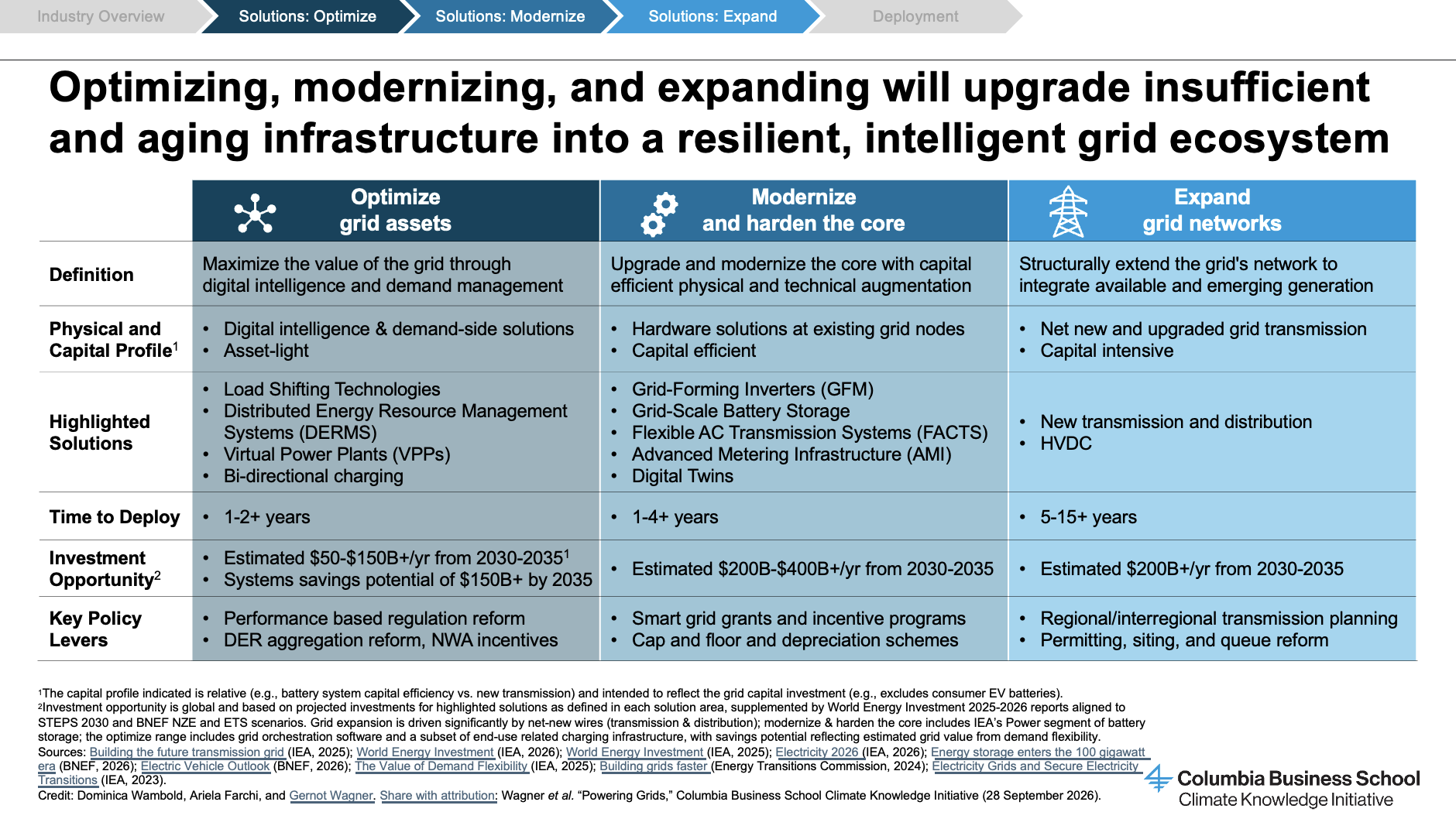
CKI Power Grid Analysis

Click to enlarge slide for further details

Explore Key Insights Further
Download the Executive Summary
Dive Into the Resources
Dive Into the Resources Photo Image
Rewiring the Power Grid: Key Insights from Industry Leaders

Rewiring the Power Grid: Key Insights from Industry Leaders

The world’s power grids deserve credit as arguably the largest, most complex machines humans have ever built. They also deserve some sorely needed attention: they’re currently under more pressure than ever before.

Image removed.
View the Insights
PSEG and the PJM Capacity Crisis Photo Image

PSEG and the PJM Capacity Crisis

Should PSEG Power monetize scarce carbon-free nuclear capacity through private bilateral contracts, support regional reliability and customer affordability across the public grid, or use it as leverage in advocating for structural reform to the PJM capacity market?

View the Case Study

Columbia Business Insights

Official Logo of Columbia Business School

Columbia University in the City of New York
665 West 130th Street, New York, NY 10027
Tel. 212-854-1100

Maps and Directions
    • Centers & Programs
    • Current Students
    • Corporate
    • Directory
    • Support Us
    • Recruiters & Partners
    • Faculty & Staff
    • Newsroom
    • Careers
    • Contact Us
    • Accessibility
    • Privacy & Policy Statements
Back to Top Upward arrow
TOP

© Columbia University

  • X
  • Instagram
  • Facebook
  • YouTube
  • LinkedIn

External CSS

Homepage Breadcrumb Block

Back to top

Accessibility Tools

English French German Italian Spanish Japanese Russian Chinese (Simplified) Chinese (Traditional) Arabic Bengali